How a Google Ads PPC Agency Supports Client Retention
See how a Google Ads PPC agency improves client retention through cleaner tracking, faster optimisation and senior white-label support.
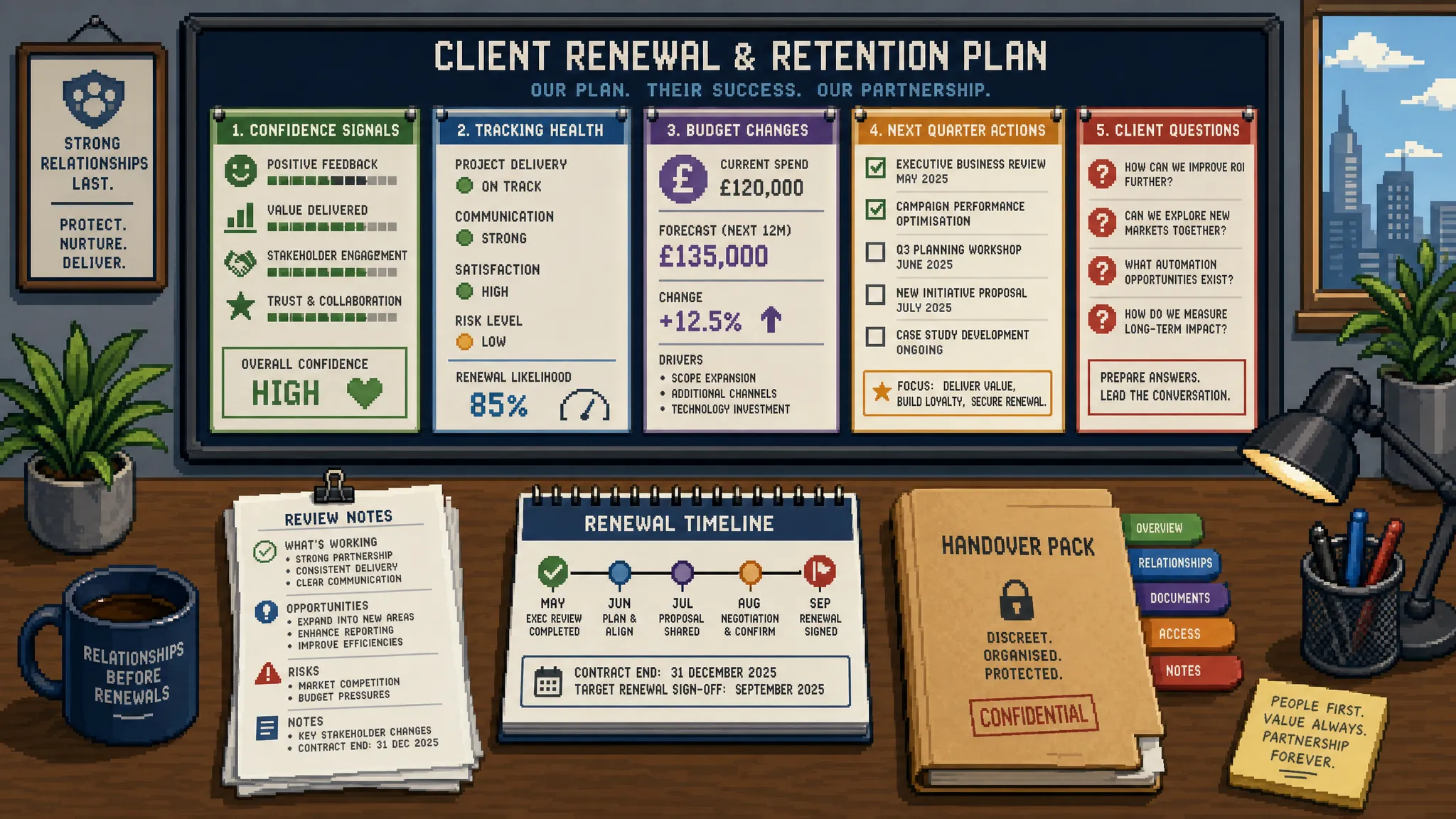
Client retention is won long before renewal month. For digital agencies, it is shaped by the small moments that either build confidence or create doubt: the account review that explains what changed, the tracking issue spotted before the client notices, the budget shift handled before spend is wasted, and the roadmap that makes next quarter feel controlled rather than reactive.
That is where a Google Ads PPC agency can become a retention asset, not just a delivery resource. When paid media is one of the client’s most visible revenue channels, weak execution quickly becomes a relationship risk. Strong execution, however, gives account managers better conversations, clearer evidence, and more reasons for clients to stay.
For agencies managing multiple clients, the challenge is not only knowing what good PPC looks like. It is delivering it consistently when workloads spike, platforms change, and clients want faster answers than your internal team can always provide.
Retention in PPC is really about confidence
Clients do not usually leave because of one poor week in Google Ads. They leave when they stop believing the agency is in control.
That loss of confidence can come from several places: unclear reporting, inconsistent optimisation, missed tracking problems, poor budget pacing, or vague explanations when performance changes. Even if the agency is doing plenty behind the scenes, the client may only see uncertainty.
A specialist PPC partner helps protect the relationship by turning account activity into a clear management rhythm. The client sees what is being monitored, why changes are being made, and how paid search supports commercial goals.
This matters because Google Ads is rarely judged in isolation. Clients connect it to lead quality, sales conversations, revenue forecasts, stock levels, seasonality, and board-level expectations. A Google Ads PPC agency that understands those commercial links gives your team stronger material for client communication.
The retention risks a PPC specialist helps reduce
Paid media accounts tend to create retention problems when the agency is forced into reactive mode. The client asks why cost per lead increased, why conversions dropped, or why spend has not scaled. If the answer is slow, unclear, or overly technical, trust weakens.
A senior PPC specialist can reduce those risks by creating better account hygiene, clearer decision-making, and faster issue resolution.
| Retention risk | How PPC support helps | Client-facing benefit |
|---|---|---|
| Budget waste | Reviews spend allocation, search terms, bidding, and campaign structure | The client feels budget is being actively protected |
| Weak reporting | Checks conversion data, attribution limits, and GA4 alignment | Performance conversations become more credible |
| Slow optimisation | Prioritises high-impact changes and urgent account fixes | The agency appears responsive and in control |
| Poor scaling decisions | Identifies when growth is limited by tracking, demand, offer, or budget | Scaling plans feel realistic rather than speculative |
| Platform complexity | Keeps up with Google Ads changes, automation, and account settings | The client trusts the agency’s technical judgement |
This does not mean every client needs constant reinvention. Often, retention improves because the basics are handled properly and consistently. Account managers can then spend less time defending performance and more time discussing strategy.
Cleaner measurement makes client conversations easier
Measurement problems are one of the fastest ways to damage client trust. If the client questions the numbers, every recommendation becomes harder to sell.
A Google Ads PPC agency supports retention by making measurement part of delivery, not an afterthought. That includes checking whether conversions are meaningful, whether GA4 data lines up with platform reporting, and whether the client understands the difference between platform-attributed conversions and actual business outcomes.
Good PPC support also helps agencies explain measurement limits honestly. Modern tracking is affected by cookie restrictions, consent settings, browser behaviour, CRM gaps, offline sales cycles, and attribution windows. Pretending the data is perfect usually backfires. Explaining what is reliable, what is directional, and what needs improvement builds trust.
For clients in regulated sectors or markets with specific privacy obligations, paid media measurement also needs to sit within a wider data governance context. Agencies may need input from legal, compliance, or data protection specialists, and resources from governance organisations such as Privacy & Legal Management Consultants can help teams understand how privacy awareness and compliance planning fit around marketing activity.
The retention advantage is simple: when reporting is transparent, clients are less likely to assume poor performance is being hidden.
Faster turnaround protects momentum
Client retention often depends on speed. Not reckless speed, but the ability to respond before a small issue becomes a renewal problem.
Examples include sudden cost increases, disapproved ads, broken landing pages, seasonal budget changes, competitor spikes, tracking drops, and campaigns that are spending without enough commercial return. If an agency waits until the next scheduled meeting to investigate, the client may already be frustrated.
A specialist PPC partner gives agencies more operational resilience. When internal teams are stretched, senior external support can help triage accounts, spot immediate risks, and decide what must be fixed first. That is especially useful for agencies handling multiple accounts with limited delivery capacity.
If your team is already juggling urgent client requests, the principles in these PPC ads best practices for agencies under pressure are a useful companion to this retention approach. Prioritisation matters because not every task has the same commercial impact.
A Google Ads PPC agency improves the quality of account reviews
Many client reviews fall flat because they describe activity rather than progress. The client hears that bids were adjusted, assets were tested, and keywords were reviewed, but they do not understand what those actions mean for their business.
A strong PPC specialist helps translate platform work into client-ready insight. Instead of saying “we optimised campaigns”, the agency can explain:
- Which segment of spend is driving the most efficient opportunities
- Which campaigns need more data before scaling decisions are made
- Which search terms reveal better or worse intent than expected
- Which conversion actions are useful and which may be inflating performance
- Which landing page or offer constraints are limiting Google Ads results
The difference is not cosmetic. Better account reviews help clients see that their agency is thinking, not just clicking around inside the platform.

White-label PPC helps agencies retain clients without overhiring
Retention becomes harder when an agency wins more work than its delivery team can comfortably handle. Hiring full-time PPC staff may be the right move eventually, but recruitment can be slow, expensive, and risky if demand is uneven.
White-label PPC support gives agencies a way to protect delivery quality without committing to permanent headcount too early. The client still has the same agency relationship, while specialist execution happens behind the scenes.
That model is particularly valuable when the agency has strong client service, creative, SEO, web, or strategy capabilities, but needs deeper Google Ads expertise for delivery. Instead of turning away work, overloading internal staff, or letting account quality slip, the agency can add senior PPC capacity when needed.
This is one reason white label PPC management helps agencies scale without weakening the client experience. For retention, the point is not just growth. It is controlled growth, where service quality does not collapse as the agency takes on more accounts.
Better PPC pricing conversations reduce renewal friction
Price objections often appear during renewals, but they usually build up earlier. Clients begin to question value when they cannot separate media spend, platform performance, management effort, setup work, tracking requirements, and strategic input.
A Google Ads PPC agency can support retention by helping your team explain what is involved in proper paid search management. Clients need to understand that PPC is not only launching campaigns and checking dashboards. It includes account structure, search intent analysis, conversion tracking, negative keyword management, creative testing, budget pacing, bidding decisions, landing page feedback, and performance interpretation.
Clearer pricing conversations also help agencies avoid under-scoping the work. If the account needs tracking repair, feed management, landing page input, or multi-market structure, that effort should not be treated as invisible. For a deeper breakdown, this guide to Google PPC pricing for agencies explains how agencies can think about the real delivery costs behind client work.
When expectations are clearer, renewal conversations become less defensive. The client sees what they are paying for and why it matters.
Strategic PPC support gives clients a reason to stay
Retention is not only about preventing problems. It is also about giving the client a credible future with your agency.
If every monthly meeting is backward-looking, the relationship can feel stagnant. A PPC specialist can help create forward momentum by identifying the next sensible opportunities, such as improving tracking quality, testing new campaign types, expanding into Microsoft Ads where appropriate, refining landing page messaging, or building a stronger remarketing approach.
The important word is “sensible”. Clients do not need a random list of tactics. They need a roadmap that reflects budget, data quality, sales capacity, seasonality, and commercial priorities.
A useful PPC roadmap usually answers three questions:
- What should we protect because it is already working?
- What should we fix because it is limiting performance?
- What should we test because it could unlock growth?
This structure helps account managers guide clients through uncertainty. Even if performance is temporarily mixed, the client can see a plan.
How PPC support strengthens the agency-client relationship
The best PPC delivery does not replace account management. It makes account management stronger.
When a specialist is working in the background, your client-facing team gets better answers, better evidence, and better timing. They can explain what happened, what changed, and what comes next without scrambling for last-minute analysis.
This is especially valuable when clients are commercially sophisticated. Many business owners and marketing leads understand enough about Google Ads to ask sharp questions, but not always enough to interpret every platform nuance. A senior PPC partner helps your agency respond with confidence.
Strong support also reduces emotional pressure on the relationship. If performance dips, the agency can quickly separate controllable issues from market changes. If performance improves, the agency can explain why, so the client understands what should be repeated or scaled.
Warning signs an account needs specialist PPC input
Not every account requires outside support, but some signals should not be ignored. Agencies should consider bringing in a specialist when delivery quality, client confidence, or internal capacity is at risk.
Common warning signs include:
- The client is asking more detailed PPC questions than the team can answer comfortably
- Google Ads spend is increasing, but the account structure has not been reviewed recently
- Conversion tracking is unclear, duplicated, or disconnected from actual lead quality
- Account managers are spending too much time chasing performance explanations
- Optimisation work is happening irregularly because the team is overloaded
- The client is approaching renewal and PPC is central to the decision
These are not signs of failure. They are signs that the account has become commercially important enough to deserve specialist attention.
What to look for in a retention-focused PPC partner
If client retention is the goal, the right partner is not simply the cheapest person who can manage campaigns. You need someone who can protect the agency relationship, communicate clearly, and understand commercial context.
Look for PPC support that is senior enough to make judgement calls, not just complete tasks. The partner should be able to explain priorities, identify risk, work anonymously if needed, and fit into your agency’s delivery process without confusing the client.
For white-label arrangements, discretion matters too. The client should experience joined-up agency delivery, not a fragmented supplier chain. A good partner strengthens your service without competing for the relationship.
It also helps to choose support that can flex with workload. Client retention is rarely predictable. Some months require routine optimisation. Others require urgent account audits, tracking checks, launch support, or rapid troubleshooting. Flexible senior support helps agencies respond without building unnecessary fixed cost into the business.
Frequently Asked Questions
How does a Google Ads PPC agency improve client retention? A Google Ads PPC agency improves retention by protecting campaign performance, improving reporting clarity, resolving issues faster, and giving account managers stronger insights for client conversations.
Is PPC performance the only factor in client retention? No. Performance matters, but clients also stay when they trust the process. Clear communication, accurate tracking, realistic expectations, and visible account management all influence retention.
When should an agency use white-label PPC support? White-label PPC support is useful when an agency needs specialist paid media delivery but wants to keep the client relationship under its own brand. It is especially helpful during growth, staff shortages, or complex account situations.
Can better tracking really help retain clients? Yes. Cleaner tracking makes reporting more credible and reduces confusion. When clients trust the numbers, they are more likely to trust the recommendations based on those numbers.
Does outsourcing PPC weaken the agency relationship? Not if it is handled properly. A discreet white-label PPC partner can strengthen the relationship by improving delivery quality while the agency remains the client’s main point of contact.
Keep clients longer with senior white-label PPC support
Client retention improves when your agency can respond quickly, explain performance clearly, and deliver paid media work at a senior level without stretching the team too thin.
PPC Ghost provides on-demand, white-label PPC expertise for agencies, including Google Ads, Meta Ads, Microsoft Ads, GA4 and tracking support. If you need senior execution without recruitment, long contracts, or visible outsourcing, PPC Ghost can help your agency protect delivery quality while you keep the client relationship.