What to Expect From a Freelance PPC Expert
Learn what a freelance PPC expert should deliver, from audits and tracking to optimisation, reporting and white-label agency support.
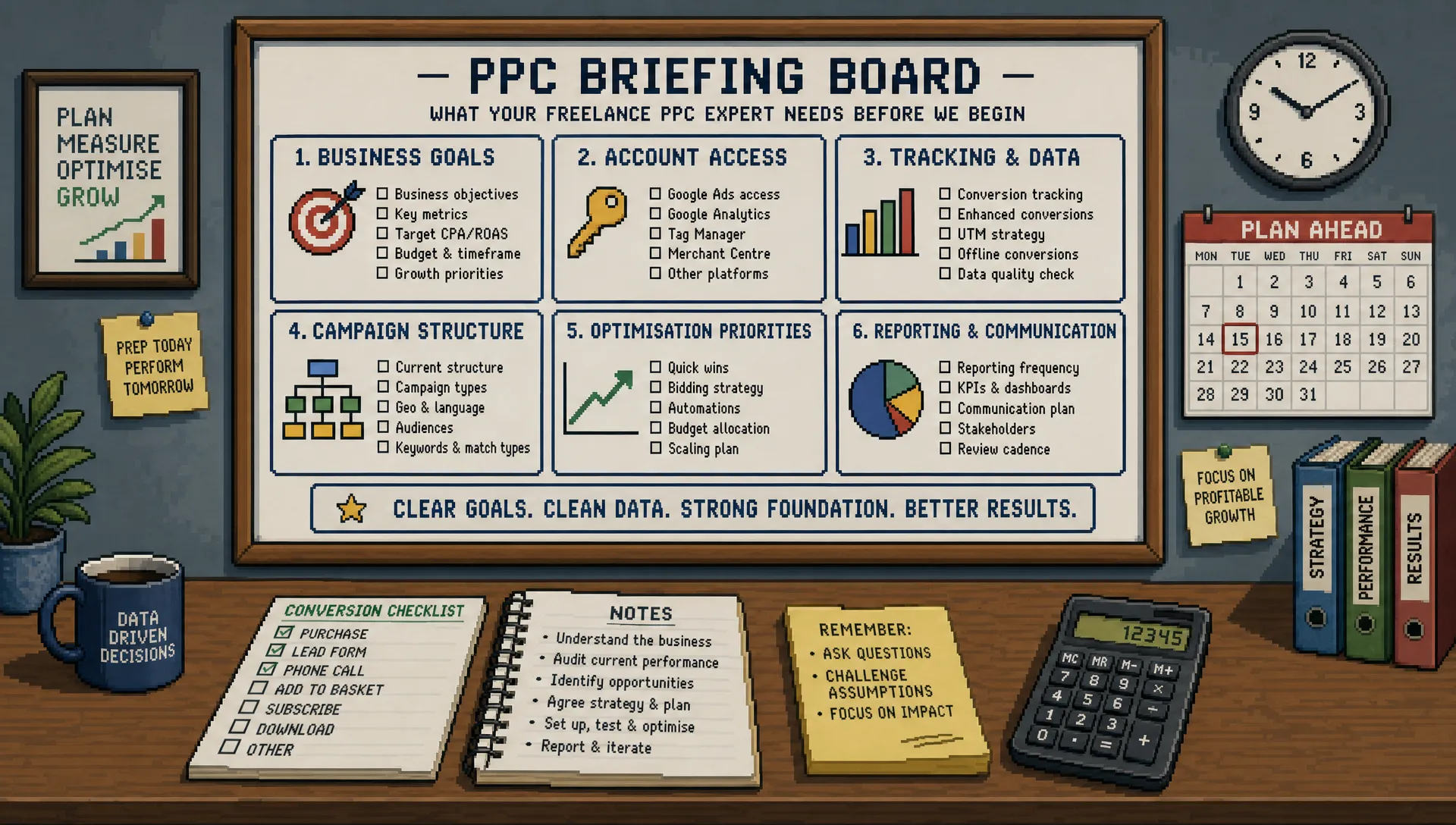
Bringing in a freelance PPC expert should give you more than an extra pair of hands inside Google Ads or Meta Ads. The right person should bring senior judgement, clean execution, clear communication and a practical understanding of how paid media fits into the wider commercial picture.
For agencies, this matters even more. You may need someone who can work quietly in the background, protect your client relationship and help you deliver specialist PPC work without recruiting another full-time team member. For in-house marketing teams, the priority may be sharper account performance, better tracking or faster campaign launches.
Either way, knowing what to expect helps you brief the work properly, judge quality early and avoid paying for activity that does not move the account forward.
What a freelance PPC expert actually does
A freelance PPC expert is responsible for planning, building, managing and improving paid media campaigns. That can include Google Ads, Meta Ads, Microsoft Ads and supporting measurement tools such as GA4, depending on the freelancer’s skill set.
At a basic level, they should be able to manage bids, budgets, audiences, keywords, creative testing and reporting. At a senior level, they should also understand commercial intent, funnel quality, lead value, conversion tracking, landing page issues and how to explain performance to stakeholders.
Typical responsibilities include:
- Auditing existing paid media accounts to identify waste, tracking issues and growth opportunities.
- Building new campaigns with a clear structure, naming convention and conversion objective.
- Managing search terms, negatives, audiences, budgets, creative tests and bidding strategies.
- Setting up or troubleshooting conversion tracking, GA4 events and platform pixels.
- Producing clear performance updates that explain what changed, why it changed and what happens next.
- Advising on landing pages, offers and lead quality when campaign data suggests the issue is not purely media buying.
The strongest freelancers do not simply “run ads”. They make paid media easier to understand, easier to manage and easier to scale.
The first thing to expect: questions, access and context
A good freelancer will not jump straight into changing campaigns without understanding the account, the business and the objective. Expect questions at the start. If they are not asking about margins, lead quality, sales cycle, target locations, conversion actions and client priorities, they may be working too tactically.
For agencies, the onboarding conversation should also cover how visible the freelancer will be. Some clients want direct contact with the PPC specialist. Others need the work delivered anonymously under the agency’s brand. If you need discreet delivery, look for a partner used to white-label PPC support for agencies, not just a freelancer who usually works directly with end clients.
The access stage usually includes ad platform access, GA4 access, Google Tag Manager access if relevant, reporting access and any previous performance summaries. The freelancer may also ask for landing page URLs, CRM feedback, call tracking details and notes from recent client conversations.
This is not admin for the sake of admin. Paid media performance often depends on what happens after the click. Google’s own conversion tracking guidance makes this clear: advertisers need to understand what people do after interacting with ads. Without that measurement layer, optimisation becomes guesswork.
What should happen in the first week
The first week should usually be diagnostic. Even when urgent changes are needed, the freelancer should form a quick view of what is working, what is wasting spend and what risks exist inside the account.
For an existing account, expect a review of campaign structure, search terms, spend allocation, conversion actions, tracking quality, bidding settings, audience signals, creative fatigue and budget pacing. For a new account, expect the first week to focus on goals, structure, tracking requirements and launch priorities.
In some cases, quick fixes can happen immediately. Examples include pausing obviously wasteful search terms, fixing broken destination URLs, correcting location targeting or identifying duplicate conversion actions. More strategic changes, such as rebuilding a messy account or changing bidding strategy, should usually be planned rather than rushed.
Many agencies bring in freelance help when warning signs are already visible, such as rising spend without better results or unreliable tracking. If that sounds familiar, the guide on when you need a Google AdWords expert on demand explores those triggers in more detail.
Core deliverables you should expect
Deliverables vary depending on whether you need a one-off audit, temporary cover, campaign build or ongoing management. Still, there are several outputs that signal a professional standard of work.
| Deliverable | What good looks like | Why it matters |
|---|---|---|
| Account audit | Clear findings, prioritised by impact and urgency | Helps separate quick wins from deeper structural problems |
| Tracking review | Confirmation of which conversions are valid, duplicated or missing | Prevents optimisation based on poor data |
| Campaign structure | Logical segmentation by service, intent, geography or funnel stage | Makes budgets, reporting and optimisation easier |
| Optimisation log | A record of meaningful changes and the reasoning behind them | Gives visibility without forcing the client to inspect every setting |
| Reporting summary | Plain-English explanation of performance, not just exported metrics | Helps agencies or stakeholders communicate value |
| Next-step plan | Specific actions for the next testing or optimisation cycle | Keeps PPC work proactive rather than reactive |
The best deliverables are useful beyond the freelancer’s own workflow. If another specialist picked up the account tomorrow, they should be able to understand what was done and why.
Strategy, not just execution
One of the biggest differences between a junior operator and a senior freelance PPC expert is strategic judgement. Paid media platforms now contain a lot of automation, but automation does not remove the need for human decision-making. In many cases, it makes senior judgement more important because the system needs clean goals, strong inputs and sensible guardrails.
A senior freelancer should be able to challenge assumptions respectfully. If the client wants more leads but the CRM shows poor lead quality, the answer may not be “increase budget”. It may be tighter keyword intent, better exclusions, a different conversion goal or improved qualification on the landing page.
If Meta Ads are driving cheap leads that never convert, the freelancer should be able to discuss creative angles, audience quality and funnel friction. If Google Ads campaigns are spending heavily on broad queries, they should be able to decide whether that spend is useful discovery or avoidable waste.
This is where experience shows. PPC is not only a platform task. It is a commercial task carried out inside advertising platforms.

Communication and workflow expectations
A reliable freelancer should make your life easier, not create another management burden. That means clear communication, agreed response times and a workflow that fits how your team already operates.
For an agency, this may mean working from your briefs, updating your project management tool, preparing client-ready notes or joining internal calls. For a business owner, it may mean fewer but more focused updates that explain performance in commercial terms.
You should expect clarity on:
- What work is being done this week.
- What decisions are needed from you or the client.
- What has changed in the account.
- What the data suggests so far.
- What cannot be concluded yet.
This last point is important. A trustworthy PPC specialist will be honest about uncertainty. They should not overstate early results, especially when campaigns need enough data to exit learning phases, test meaningful variations or judge lead quality.
Timelines: how quickly should you see results?
Some PPC tasks create value quickly. Others take time because they depend on data volume, conversion lag, sales feedback and platform learning.
A tracking fix, search term clean-up or budget reallocation can have a fast impact. A full account restructure, Performance Max test, Meta creative testing cycle or lead quality improvement programme may need several weeks before the pattern is clear.
| Timeframe | Typical focus | Realistic expectation |
|---|---|---|
| First few days | Access, audit, urgent fixes and measurement checks | Better visibility and reduced obvious waste |
| First 30 days | Structural improvements, testing plan and early optimisation | Clearer direction and more disciplined spend allocation |
| 60 to 90 days | Deeper testing, budget refinement and conversion quality analysis | Stronger evidence of what should scale or stop |
| Ongoing | Iteration, reporting, expansion and risk management | Continuous improvement rather than one-off changes |
Be wary of anyone promising instant profit improvements without reviewing the account, market, offer and tracking. PPC can move quickly, but good PPC still relies on evidence.
What a freelance PPC expert should not promise
A freelancer should be confident, but not reckless. No paid media specialist can guarantee a specific ROAS, cost per lead or revenue outcome without controlling the offer, website, sales process, market demand and budget.
They also should not promise that one platform will solve every problem. Google Ads might be ideal for high-intent demand capture, while Meta Ads may be better for demand generation, remarketing or creative-led acquisition. Microsoft Ads can be valuable in some markets, but it will not suit every brief.
The most credible answer is usually conditional: “Based on the current data, here is the opportunity, here are the risks and here is the test I recommend.”
How pricing and scope usually work
Freelance PPC pricing can be structured in several ways. Some specialists charge by the hour or day. Others use fixed project fees for audits, builds or tracking work. Ongoing management is often priced as a monthly retainer, although some on-demand specialists offer more flexible arrangements.
The key is not the pricing model alone. It is whether the scope matches the work required. A small account with one campaign and clean tracking should not need the same level of input as a multi-market account with broken conversion data and multiple platforms.
Before starting, agree what is included. For example, clarify whether reporting, calls, GA4 troubleshooting, landing page feedback, copywriting, creative briefing and client communication are part of the engagement. This prevents friction later and helps both sides work efficiently.
For agencies that need senior PPC capacity without recruitment, on-demand support can be especially useful. The article on how paid media PPC support helps agencies scale faster explains how external delivery can remove bottlenecks while keeping client ownership inside the agency.
Freelance PPC expert vs agency vs in-house hire
The right option depends on workload, budget, urgency and how much strategic ownership you need.
| Option | Best suited to | Main advantage | Possible limitation |
|---|---|---|---|
| Freelance PPC expert | Specific accounts, urgent support, specialist execution | Flexible access to senior skill | Capacity may be limited if demand spikes |
| PPC agency | Broader managed service across strategy, media and reporting | More structured team support | May involve higher retainers or longer commitments |
| In-house hire | Long-term ownership and daily business immersion | Deep brand and internal knowledge | Recruitment, salary and management overhead |
| White-label PPC partner | Agencies needing invisible specialist delivery | Scales delivery without exposing the partner | Requires a clear brief and trust-based workflow |
For many agencies, the best model is not either freelance or in-house. It is a flexible layer of senior support that can step in when workload spikes, a complex account needs attention or a client requires specialist paid media expertise.
Red flags to watch for
A poor PPC freelancer can be expensive even if their day rate looks cheap. The biggest warning signs are vague explanations, overreliance on platform recommendations, no interest in tracking, no written record of changes and an inability to explain performance in simple terms.
Another red flag is activity without prioritisation. PPC accounts can always be adjusted, but not every adjustment matters. A good specialist knows when to make changes, when to wait for data and when to challenge the brief.
You should also be cautious if a freelancer focuses only on clicks, impressions or traffic volume. Those metrics can be useful, but most businesses and agencies ultimately care about qualified leads, revenue, pipeline, profit or cost efficiency.
What you should provide to get the best from them
A freelance PPC expert can only be as effective as the information available. Clear commercial context speeds up decision-making and reduces wasted testing.
Before work begins, try to provide current goals, target locations, budget limits, service priorities, historical performance, landing page details and any known issues with lead quality. If you are an agency, add client sensitivities as well. For example, mention whether the client dislikes sudden budget shifts, prefers conservative testing or needs reports in a particular format.
The more context you share, the faster a senior freelancer can distinguish between a PPC problem and a wider business problem.
Frequently Asked Questions
What does a freelance PPC expert do? A freelance PPC expert plans, builds, manages and optimises paid advertising campaigns across platforms such as Google Ads, Meta Ads and Microsoft Ads. They may also support tracking, GA4 setup, reporting and strategic advice.
How soon should I expect results from PPC work? Some improvements, such as removing wasted spend or fixing tracking issues, can happen quickly. Bigger performance gains usually need several weeks of data, testing and optimisation before you can judge the impact properly.
Is a freelance PPC expert suitable for agencies? Yes, especially when the agency needs senior delivery capacity without hiring. Many agencies use freelance or white-label PPC support for overflow work, specialist audits, campaign builds, temporary cover and complex account troubleshooting.
What should I ask before hiring a PPC freelancer? Ask about platform experience, tracking knowledge, reporting style, availability, communication process, previous account types and how they prioritise optimisation work. You should also clarify whether they can work white-label if your agency requires it.
Can a freelance PPC expert guarantee results? No credible PPC specialist should guarantee fixed results without first understanding your account, offer, market, website and sales process. They can forecast opportunities, reduce obvious waste and run structured tests, but performance depends on several factors.
Need senior PPC support without hiring?
If you are an agency that needs experienced paid media execution without recruitment, long contracts or visible outsourcing, PPC Ghost provides white-label PPC support on demand. You get senior-only help across Google, Meta, Microsoft Ads and tracking support, while your agency keeps the client relationship.
Use a freelance PPC expert when you need more than task completion. Use one when you need calm judgement, clean execution and a specialist who can make paid media easier to manage, explain and scale.