What White Label PPC Services Should Include
Learn what white label PPC services should include, from tracking and campaign build to reporting, optimisation and agency-safe delivery.
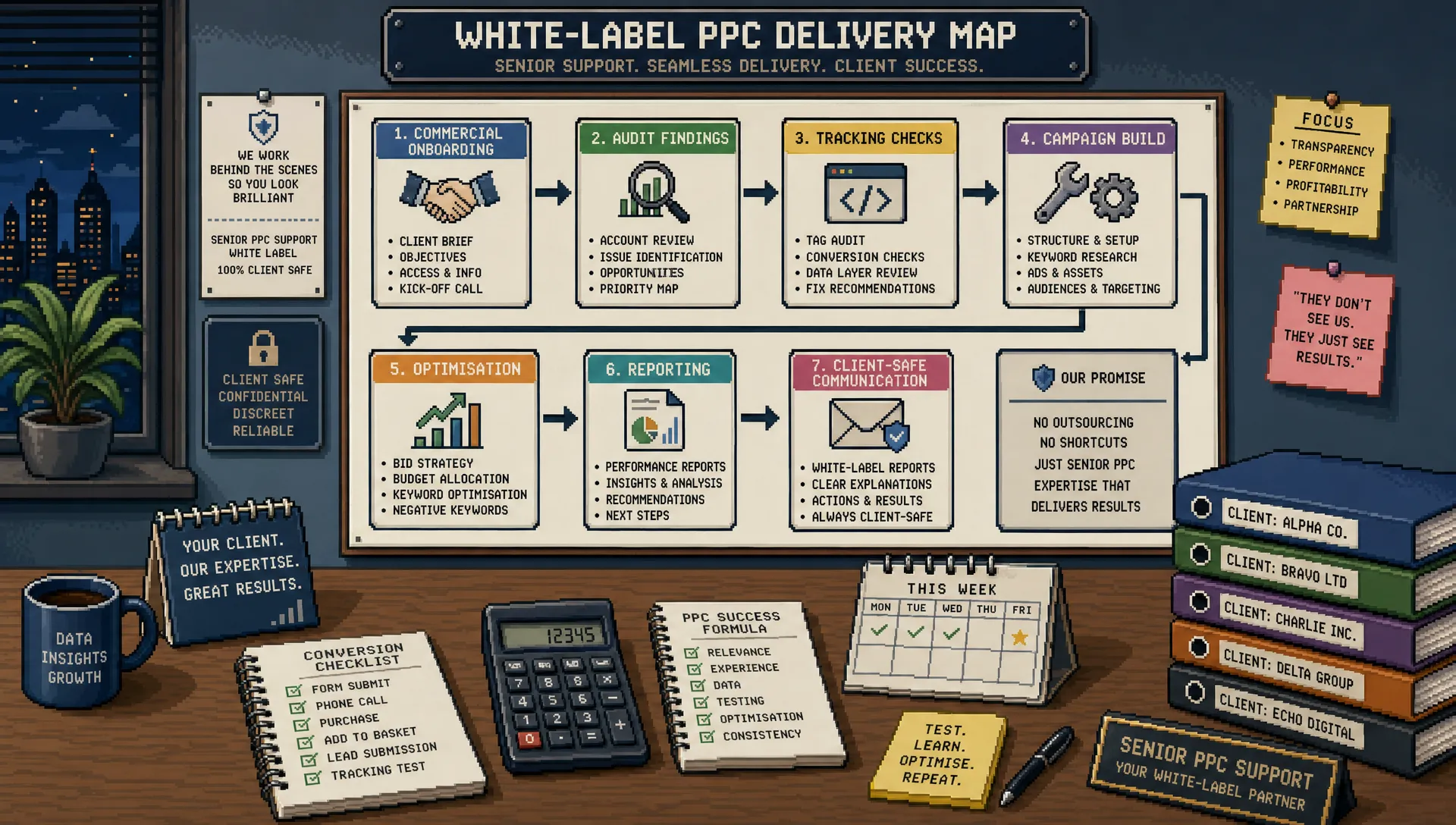
White-label PPC can be one of the most useful ways for an agency to expand delivery capacity without hiring. But the value depends entirely on what is actually included.
Some providers treat white-label PPC services as basic campaign maintenance. Others act like a senior paid media department behind the scenes, supporting strategy, tracking, optimisation, reporting and commercial decision-making. For agencies, that difference matters. A vague scope can lead to missed deadlines, unclear ownership, weak reporting and awkward client conversations.
The right white-label setup should protect your agency’s reputation, not create another layer of management. It should give you reliable execution, senior judgement and a clean process that allows your team to stay client-facing while the specialist works invisibly in the background.
What are white-label PPC services?
White-label PPC services are paid media services delivered by an external specialist or team under your agency’s brand. Your client sees your agency as the provider, while the white-label partner handles some or all of the PPC work in the background.
This can include Google Ads, Meta Ads, Microsoft Ads, tracking setup, account audits, campaign builds, optimisation and reporting. The exact scope varies, which is why agencies need to be precise before handing over client accounts.
A good white-label PPC partner should not simply “manage ads”. They should understand how agencies work. That means respecting confidentiality, giving your team useful updates, avoiding direct client contact unless agreed, and making it easy for your agency to communicate performance clearly.
If your agency is exploring this model for growth rather than just temporary overflow, it is worth understanding why white-label PPC management helps agencies scale before you define the delivery scope.
Commercial onboarding and account context
Strong PPC work starts with context. Before anyone restructures campaigns or launches new ads, the white-label provider should understand what the client is trying to achieve commercially.
This is where many underperforming PPC engagements go wrong. If the provider only asks for ad account access and a target CPA, they may miss the bigger picture. For example, two lead generation clients can have the same cost-per-lead target but very different realities. One may close 40 percent of leads with a high average order value. Another may receive low-quality enquiries that waste the sales team’s time.
Useful onboarding should clarify:
- The client’s core products or services, margins and best customers.
- The primary conversion actions and what counts as a qualified result.
- Sales cycle length, seasonality and geographic priorities.
- Historical performance, known issues and internal expectations.
- Budget limits, growth targets and reporting requirements.
- Brand restrictions, compliance needs and approval processes.
This is not admin for the sake of admin. It helps the PPC specialist make better decisions about budgets, bidding, campaign structure, keyword intent, creative messaging and optimisation priorities.
Account audits and performance diagnosis
If the client already has active campaigns, white-label PPC services should include an audit or diagnostic review before major changes are made. This does not always need to be a long document, but it should identify what is working, what is wasting spend and what needs urgent attention.
A practical PPC audit usually covers campaign structure, search terms, conversion tracking, bidding strategy, budget allocation, ad assets, landing page alignment and audience setup. It should also separate quick wins from deeper structural issues.
For example, a quick win might be excluding irrelevant search terms or pausing a poor-performing asset group. A deeper issue might be that the account is optimising towards form submissions that include spam, duplicate enquiries or low-intent leads.
For Google Ads specifically, the standards are similar to what you would expect from professional Google Ads management: clear measurement, sensible structure, active search term control, budget discipline and a focus on commercial outcomes.
Tracking, GA4 and conversion quality
PPC performance is only as reliable as the data behind it. White-label PPC services should include tracking review as a core part of the work, not an afterthought.
At minimum, the provider should check whether conversion actions are firing correctly, whether they are duplicated, whether primary and secondary conversions are configured sensibly, and whether the account is optimising towards actions that genuinely matter.
Google explains that conversion tracking shows what happens after someone interacts with an ad, such as purchases, calls, sign-ups or other valuable actions. In practice, agencies also need a layer of human judgement. Not every conversion should be treated equally, and not every tracked action should guide bidding.
For lead generation, this may involve distinguishing between form fills, qualified leads, phone calls, booked appointments and closed deals. For ecommerce, it may involve checking purchase values, feed quality, revenue attribution and profit considerations.
A strong white-label PPC partner should be comfortable discussing GA4, Google Tag Manager, platform pixels, offline conversion imports and CRM feedback loops where relevant. They do not always need to build every technical implementation themselves, especially if development access is required, but they should be able to diagnose problems and explain what needs fixing.
Campaign strategy and build-out
Campaign build is one of the most obvious things agencies expect from white-label PPC services, but the quality can vary dramatically.
A proper campaign build should be based on intent, budget, measurement and the client’s business model. It should not be a copied template with the brand name swapped out.
For Google Ads and Microsoft Ads, this may include keyword research, match type planning, negative keyword strategy, ad copy, assets, location targeting, bidding strategy, campaign naming conventions and budget allocation. For Performance Max, it should include asset group planning, audience signals, feed considerations where relevant, brand controls and a clear view of how success will be measured.
For Meta Ads, it may include campaign objective selection, audience structure, creative testing angles, pixel or dataset checks, placement strategy, budget distribution and a testing plan. Since Meta is heavily creative-led, agencies should be clear about whether the white-label provider is supplying copy direction, creative briefs, full creative production or simply media buying execution.
The key point is that build-out should connect the media plan to the client’s goals. If the client needs profitable ecommerce growth, the structure should not be judged only on traffic volume. If the client needs qualified B2B leads, the strategy should not chase cheap form fills with weak intent.
Ongoing optimisation and active management
White-label PPC management should include regular optimisation, not just monthly check-ins. Paid media accounts change constantly as search behaviour, competition, creative fatigue, budget constraints and platform automation shift performance.
Ongoing optimisation can include search term reviews, negative keyword updates, bid adjustments, budget pacing, ad copy testing, creative testing, landing page feedback, asset improvements, feed checks, audience refinements and conversion quality analysis.
The best providers do not optimise only inside the ad platform. They also look for patterns outside the interface. Are leads poor quality from one campaign? Is one product attracting spend but not profit? Are calls happening after hours? Is a landing page creating friction? These questions often reveal the difference between busy account activity and meaningful performance improvement.
In 2026, platform automation makes this judgement even more important. Smart bidding, Performance Max and Advantage+ can be powerful, but they still need good inputs, clean conversion data, budget control and human oversight.
Reporting that helps your agency lead the conversation
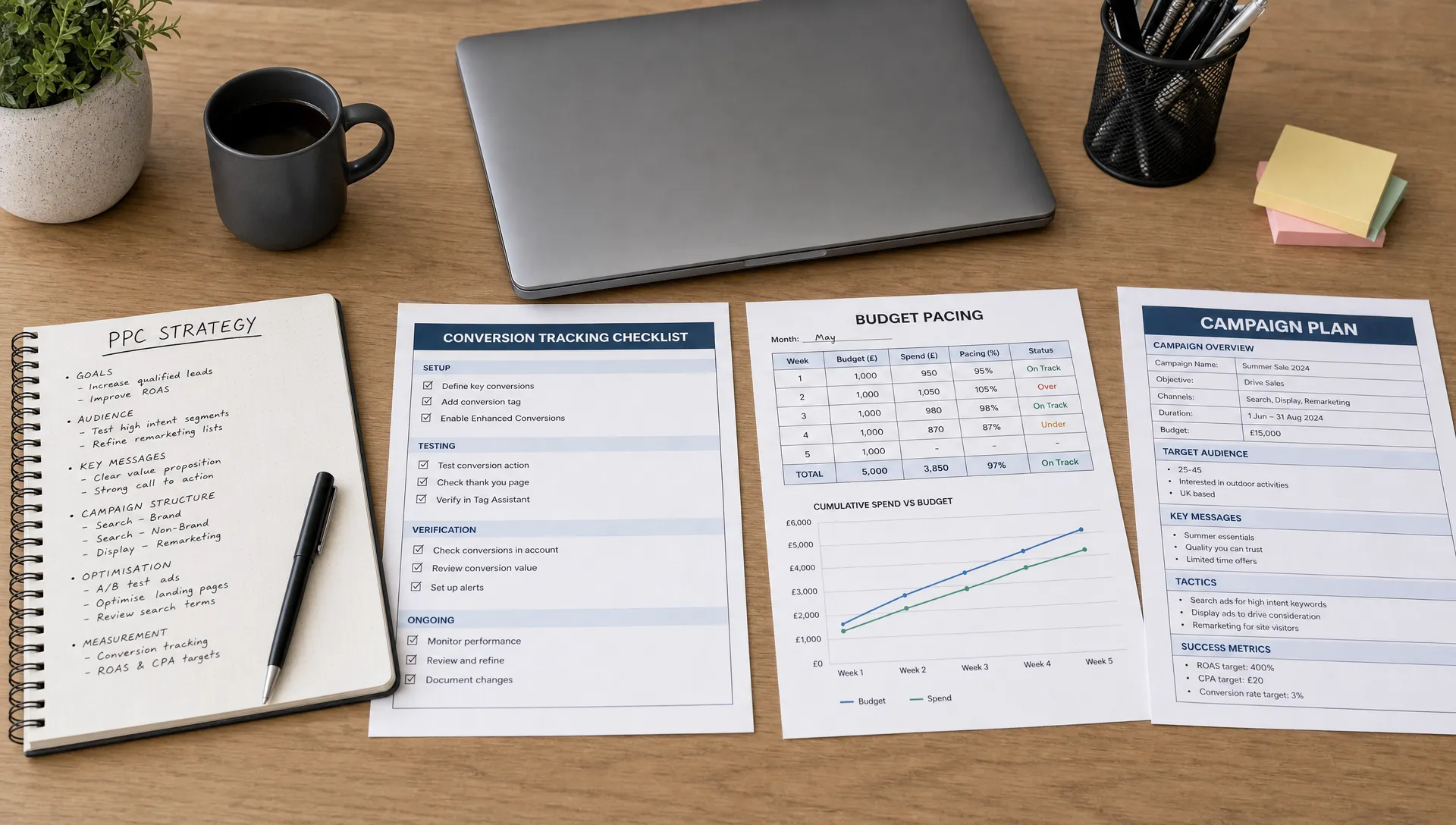
White-label PPC services should include reporting that your agency can use confidently with clients. A spreadsheet of metrics is not enough.
Good reporting should explain what happened, why it happened, what actions were taken and what should happen next. It should also use the right level of detail for the audience. Your internal team may need tactical notes, while the client may need a concise summary of performance against objectives.
A useful white-label report usually includes:
- Spend, conversions, revenue or lead volume, depending on the account type.
- CPA, ROAS, conversion rate and other efficiency metrics where relevant.
- Budget pacing and any risks of underspend or overspend.
- Key changes made during the reporting period.
- Clear commentary on wins, concerns and next steps.
- Questions or blockers your agency needs to raise with the client.
For agencies, the most valuable reporting is not just branded. It is decision-ready. It should help you walk into a client meeting with confidence, explain performance honestly and recommend a clear course of action.
Agency-safe communication and confidentiality
White-label delivery only works if the process protects the agency relationship. Your PPC partner should be invisible to the client unless you have agreed otherwise.
That means communication should be clear, discreet and designed around your workflow. The provider should not contact clients directly, add visible branding, use their own email signature in client-facing documents, or speak as a third-party supplier unless that is part of the arrangement.
Agencies should confirm how communication will work before the first task begins. This includes response times, preferred channels, task brief formats, meeting expectations, approval processes and escalation routes.
A good white-label specialist should also understand that agencies sometimes need support before a client meeting, pitch, renewal or performance review. Speed matters, but so does clarity. Fast delivery is only useful if the work is accurate and easy for your team to use.
If you are comparing different providers, this is one of the areas covered in more detail in our guide to what to look for in a white-label Google Ads agency.
Budget pacing and commercial judgement
Budget management is not just checking whether the account spent the planned amount. White-label PPC services should include pacing, prioritisation and honest commercial feedback.
If a campaign is spending too quickly without enough qualified conversions, the provider should flag it. If a campaign is underspending because targeting is too narrow, tracking is broken or the bid strategy is constrained, they should explain the cause. If the client’s budget is unrealistic for the market, your agency needs to know before performance becomes a relationship issue.
This is especially important for agencies managing multiple clients. You need a PPC partner who can identify risk early, not someone who waits until the monthly report to mention that the account has drifted.
Budget conversations should include performance context. Spending less is not automatically good, and spending more is not automatically bad. The question is whether spend is moving towards valuable outcomes at a level the client can justify.
Documentation, access and handover
White-label PPC should not create dependency on one person’s memory. Good providers document important decisions, account changes, test results and open issues.
This matters for continuity. If your internal team needs to answer a client question, you should not have to reverse-engineer what happened in the account. If the client pauses work, changes agency or moves PPC in-house, the account should still make sense.
Documentation can include change logs, naming conventions, testing notes, tracking notes, budget decisions and monthly action summaries. It does not need to be excessive, but it should be clear enough that another competent marketer could understand the account logic.
Access should also be handled carefully. The agency should retain ownership or appropriate admin access wherever possible. The provider should use secure access methods, respect client data and avoid creating unnecessary operational risk.
What should be included as standard, and what should be scoped separately?
Not every useful PPC-related task should automatically be included in a white-label management fee. The important thing is to define expectations upfront.
| Service area | Should it be included? | Notes for agencies |
|---|---|---|
| Account audit and diagnosis | Usually yes | Especially important before taking over an existing account. |
| Conversion tracking review | Yes | Implementation may need separate technical support if website or CRM access is required. |
| Campaign build and optimisation | Yes | This is the core of most white-label PPC services. |
| White-labelled reporting | Yes | Reports should be usable by the agency in client communication. |
| Client calls | Depends on scope | Some providers stay fully behind the scenes, while others can join calls under your brand if agreed. |
| Landing page design or development | Usually separate | PPC specialists can advise, but design and development may need a different skill set. |
| Creative production for Meta Ads | Depends on scope | Copy angles and briefs may be included, but full design or video work should be clarified. |
| CRM or offline conversion setup | Often separate | Valuable for lead quality, but may require client-side systems access. |
| New business pitch support | Depends on provider | Useful for agencies, but should be agreed before deadlines. |
This table is not about limiting value. It is about avoiding assumptions. A clear scope protects the agency, the provider and the client.
Red flags in white-label PPC services
Agencies should be cautious if a provider is vague about who is doing the work, avoids discussing tracking, offers generic reports, guarantees specific results, or focuses only on platform activity without asking about business outcomes.
Another red flag is a provider who does not understand confidentiality. White-label work requires discipline. Even small mistakes, such as branded file names or visible third-party email addresses, can undermine the agency’s positioning.
Be wary of anyone who promises that PPC can be fully automated without senior oversight. Automation is now part of modern paid media, but it does not replace strategy, measurement, testing or commercial judgement.
The right partner should make your agency feel more in control, not less.
Questions to ask before choosing a white-label PPC provider
Before you hand over client accounts, ask practical questions that reveal how the provider actually works:
- Who will be working on the account, and how senior are they?
- Which platforms are covered, such as Google Ads, Meta Ads and Microsoft Ads?
- Is tracking review included before optimisation begins?
- How are tasks briefed, delivered and approved?
- What does reporting include, and can it be white-labelled?
- Will the provider ever contact the client directly?
- What turnaround times are realistic for audits, builds and urgent fixes?
- What is out of scope unless agreed separately?
- How are budget risks, performance drops and tracking issues escalated?
The answers should be specific. If the provider cannot explain their process clearly before you start, the delivery process is unlikely to become clearer later.
Frequently Asked Questions
Do white-label PPC services include strategy? They should include enough strategy to make campaign decisions commercially sensible. This means understanding goals, budgets, conversion quality and channel fit, not just changing bids or launching ads.
Should white-label PPC services include tracking setup? They should at least include tracking review and diagnosis. Full setup may be included or scoped separately depending on website access, CRM complexity and whether development work is needed.
Can a white-label PPC provider speak directly to my client? Only if your agency agrees. Many white-label partners work completely behind the scenes, while some can join calls under the agency’s brand. This should be defined before work begins.
Do white-label PPC services cover Meta Ads as well as Google Ads? Some do, but not all. If your agency needs Google Ads, Meta Ads and Microsoft Ads support, confirm platform coverage before choosing a provider.
Should reporting be white-labelled? Yes. Reporting should be usable by your agency without exposing the external provider. It should also include clear commentary, actions and next steps, not just screenshots or raw metrics.
Can white-label PPC services guarantee results? No reputable provider should guarantee exact results because performance depends on budget, market demand, offer strength, tracking quality, landing pages and competition. They should guarantee a clear process, senior attention and honest communication.
Need senior white-label PPC support behind your agency?
The best white-label PPC services combine expert execution with agency-safe delivery. They should help you improve performance, protect client relationships and scale capacity without recruitment pressure.
PPC Ghost provides on-demand, white-label PPC support for UK agencies across Google Ads, Meta Ads, Microsoft Ads, GA4 and tracking. It is built for agencies that need senior-only expertise, flexible scaling, same-day turnaround and pay-as-you-go support without long contracts.
If you want a discreet PPC specialist behind your agency, PPC Ghost can help you deliver the work while your agency keeps the credit.