Signs You Need a Google AdWords Expert on Demand
Spot the signs you need a Google AdWords expert on demand, from wasted spend to tracking gaps, and learn when agency support pays off.
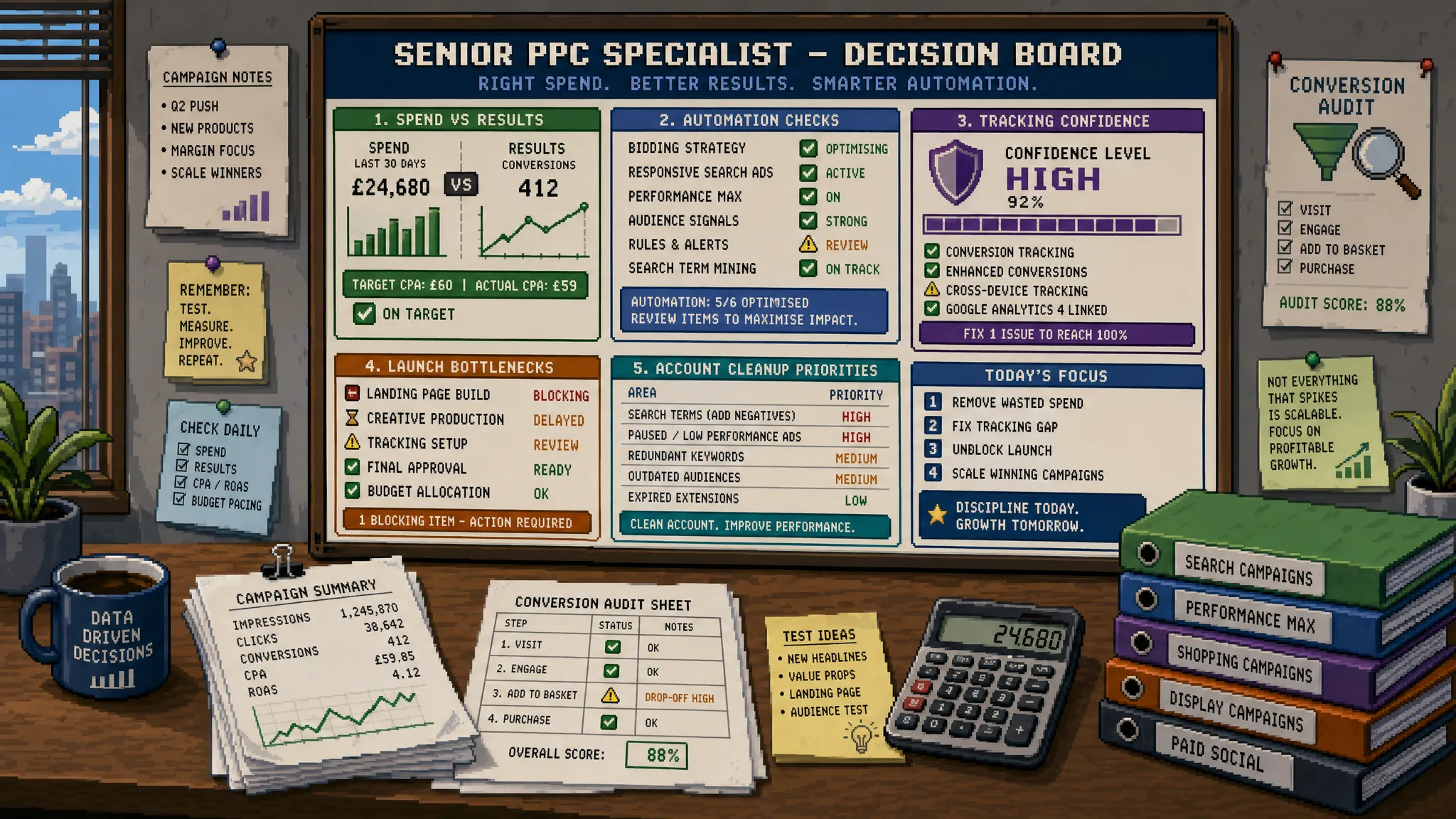
Google AdWords may have been rebranded as Google Ads years ago, but many agency owners and clients still use the phrase Google AdWords expert when they mean one thing: someone who can take a paid search account, understand what is really happening, and make performance better without needing weeks of hand-holding.
For digital agencies, the question is not always, “Do we need PPC?” You may already offer paid media, manage a few accounts, or have a generalist marketer covering campaign setup. The more commercial question is, “Do we need senior Google Ads help on demand, without hiring full-time?”
That question usually appears at a stressful moment. A client is asking why leads have dropped. A campaign launch is stuck. A budget increase has made inefficiencies more expensive. Or a promising account has become too complex for the internal team’s available time.
Here are the clearest signs that bringing in a Google AdWords expert on demand is the smarter move.
1. Spend is increasing, but commercial results are not
One of the most obvious warning signs is a gap between media spend and business outcomes. Clicks may look healthy, impressions may be climbing, and automated recommendations may suggest there is “more opportunity”, but the client is not seeing more qualified leads, pipeline, revenue, or bookings.
This is where a senior Google Ads specialist looks beyond surface metrics. Rising CPCs are not automatically bad. A lower conversion rate is not always the main issue. The real problem might be poor query quality, weak landing page alignment, over-broad targeting, tracking duplication, low-intent Performance Max traffic, or bidding strategies optimising towards the wrong conversion action.
If your account conversations are becoming too focused on “what changed in the dashboard” rather than “what changed in the economics”, you probably need expert input.
A useful PPC review should connect:
- Search intent to landing page relevance
- Conversion actions to actual lead quality
- Bidding strategy to budget and volume constraints
- Campaign structure to the client’s commercial priorities
- Reporting metrics to the outcomes the client actually values
If spend has grown faster than confidence, it is time to get a specialist involved.
2. You are relying too heavily on Google’s automated recommendations
Google Ads automation can be powerful, especially when conversion tracking, budgets, and campaign structures are clean. But automation is not the same as strategy.
If your team is regularly applying recommendations without testing the commercial impact, you may be handing control to the platform without enough human judgement. Recommendations around broad match, budget increases, bidding changes, auto-applied assets, and Performance Max expansion can be useful in the right context, but risky in the wrong one.
A Google AdWords expert on demand can separate helpful automation from account-level noise. They can ask the questions that matter before changes go live:
- Is the account feeding the algorithm reliable conversion data?
- Is the campaign limited by budget, rank, conversion volume, or demand?
- Are there enough high-quality conversions for Smart Bidding to learn from?
- Will expansion bring incremental revenue, or just cheaper low-quality leads?
- Does the recommendation support the client’s margin, capacity, and sales cycle?
This is especially important for agencies because a single poor automated change can damage both performance and client trust.
3. Tracking is not trusted by the client or your team
If nobody fully trusts the numbers, optimisation becomes guesswork.
Tracking problems are one of the strongest signs that you need senior PPC support. Google Ads performance depends heavily on clean conversion data. If GA4 events, Google Ads conversions, enhanced conversions, consent settings, call tracking, CRM imports, and form submissions are not aligned, the account may optimise towards incomplete or misleading signals.
Common red flags include:
- Google Ads conversions do not match CRM enquiries
- GA4 and Google Ads report very different results without a clear explanation
- Phone calls are counted, but quality is unknown
- Form fills are duplicated or inflated
- Old conversion actions are still set as primary goals
- Performance Max is optimising towards soft actions such as page views or button clicks
A senior PPC expert does not need to replace your analytics team, but they should be able to identify whether the media account is being fed the right data. PPC Ghost, for example, supports Google Ads execution alongside GA4 and tracking support, which matters because account performance and measurement quality are now tightly connected.
4. Client questions are becoming more technical than your team can answer confidently
Many agencies are excellent at strategy, web design, SEO, creative, content, or client service, but Google Ads can quickly become technical. When clients start asking detailed questions about auction insights, attribution, match types, Performance Max placements, negative keywords, consent mode, or conversion value rules, a generalist answer may not be enough.
This does not mean your team is weak. It means the account has reached a stage where specialist judgement is valuable.
The risk is not simply giving an imperfect answer. The bigger risk is losing authority. Once a client senses uncertainty around a channel that spends real money every day, confidence can erode quickly.
An on-demand expert can support behind the scenes with audits, recommendations, call prep, or white-label delivery, helping your agency retain the relationship while strengthening the technical substance behind your advice.
5. Campaign launches are taking too long
Speed matters in agency life. New landing pages go live, seasonal campaigns need to launch, promotions change, and clients expect paid media to move quickly.
If Google Ads launches are repeatedly delayed because the right person is unavailable, campaign QA takes too long, tracking is not ready, or your team is unsure how to structure the account, an on-demand specialist can remove the bottleneck.
The same applies to urgent fixes. When a client flags a sudden drop in leads or a budget overspend, waiting several days for internal capacity can make the issue worse.
This is where on-demand support differs from traditional hiring. You are not necessarily looking for a full-time employee. You may need a senior pair of hands for a launch, audit, restructure, tracking review, or emergency triage.
| Sign inside the agency | What it usually means | Why on-demand expertise helps |
|---|---|---|
| Campaigns sit in draft for days | PPC setup depends on one overloaded person | A specialist can build, QA, or advise quickly |
| Client questions wait too long | Internal confidence is limited | Senior input improves response quality |
| Launches happen without proper tracking | Speed is being prioritised over measurement | Expert QA reduces avoidable data problems |
| Account changes feel reactive | There is no clear optimisation rhythm | A specialist can prioritise the highest-impact work |
6. You have inherited a messy account
Inherited accounts are often full of history. Old campaigns, legacy keywords, inconsistent naming conventions, duplicate conversion actions, paused experiments, outdated audiences, unclear negative keyword logic, and bidding strategies chosen for reasons nobody remembers.
A messy account is not always a bad account, but it is harder to manage safely. Junior team members may either avoid making changes because they fear breaking something, or make changes without understanding the original logic.
A Google AdWords expert can review the account and identify what should be kept, cleaned, restructured, paused, or tested. The goal is not to rebuild everything for the sake of it. The goal is to create an account that is easier to manage, easier to explain, and better aligned with the client’s objectives.
For practical areas to review first, PPC Ghost has also shared guidance on PPC Google Ads tips that cut wasted spend fast, which is especially useful when an account needs quick efficiency gains before deeper restructuring.
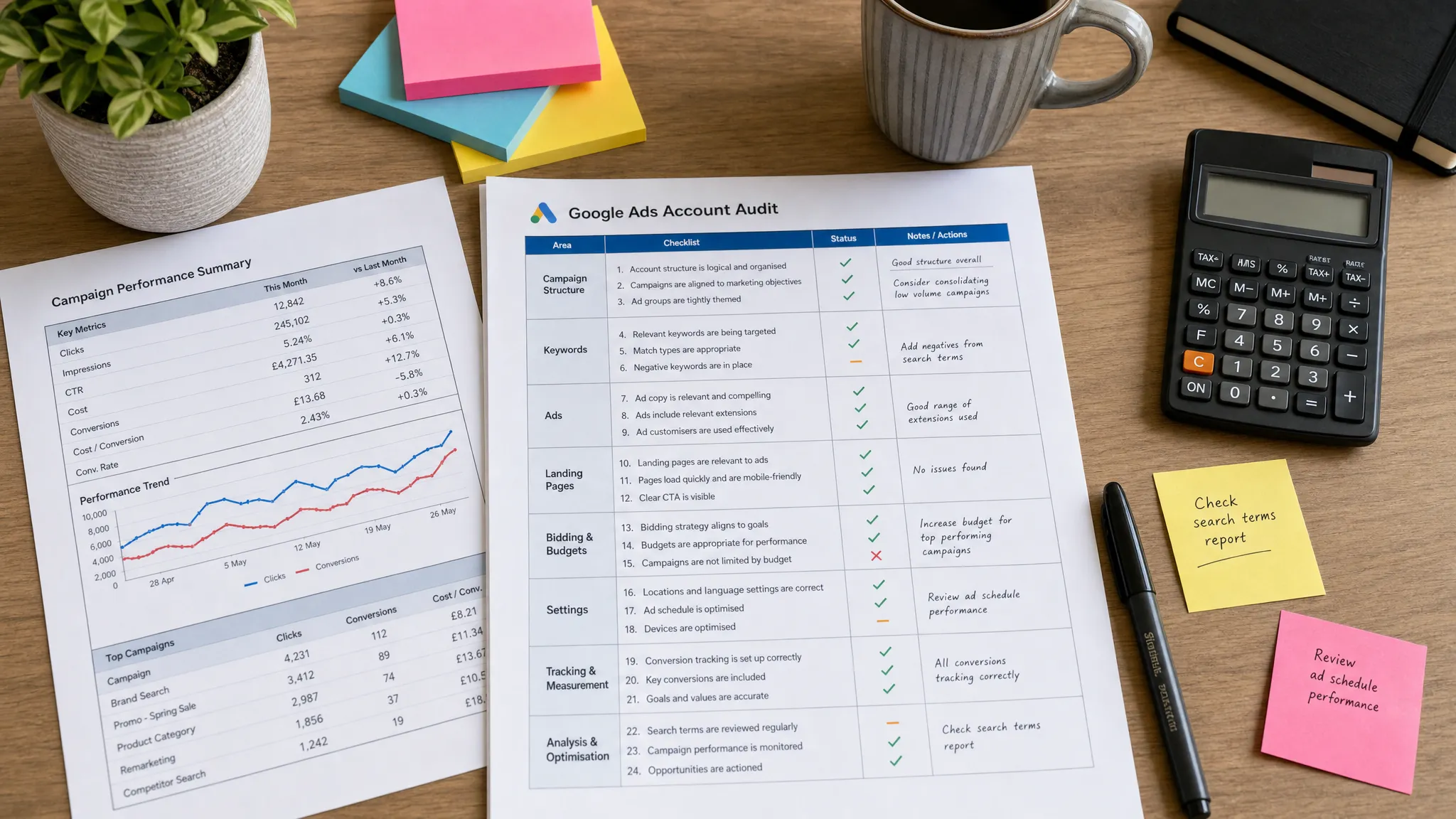
7. Performance Max feels like a black box
Performance Max can drive strong results, but it can also create uncertainty. Agencies often struggle to explain what is happening inside the campaign, especially when asset groups, search themes, audience signals, feed quality, conversion goals, brand exclusions, and final URL expansion are not set up carefully.
You may need expert help if:
- Performance Max is spending heavily but lead quality is unclear
- Brand and non-brand performance are being blended together
- Search campaigns appear to be losing volume without a clear reason
- Asset groups are organised around convenience rather than commercial intent
- The client is asking where the budget is going and your team cannot explain it clearly
A specialist can help decide whether Performance Max should be scaled, constrained, restructured, split by objective, or supported by stronger Search campaigns. The point is not to reject automation. The point is to give automation a better operating environment.
8. Your reporting is descriptive, not diagnostic
Many PPC reports explain what happened. Fewer explain why it happened and what should happen next.
If your monthly reports are mostly screenshots, percentage changes, and generic commentary, clients may start to question the value of the management fee. A strong PPC report should connect performance changes to specific causes, actions, and commercial implications.
For example, “conversions fell by 18%” is descriptive. A diagnostic version might say, “Conversions fell by 18%, largely because generic non-brand CPCs rose while impression share was lost on the highest-converting exact match terms. We are shifting budget back to proven terms, tightening broad match queries, and reviewing landing page conversion rates before increasing spend.”
That level of clarity usually comes from experience. If your team is struggling to turn data into confident recommendations, a Google Ads expert on demand can help improve the substance behind your client communications.
This diagnostic mindset is not limited to PPC. Teams building AI-led products face a similar challenge: the issue is rarely just the metric going down, but understanding where adoption breaks. If your agency also works with AI products or internal AI workflows, a structured resource such as the AI Product Adoption Deck can be useful for thinking through diagnostics, trust, retention, and user behaviour in a more systematic way.
9. You are winning clients faster than you can service them
Growth can create delivery risk. An agency might win several new retainers, add paid media to existing client scopes, or land a larger account than usual. Suddenly, the team that could comfortably manage PPC last quarter is overloaded.
Hiring full-time is not always the answer. Recruitment takes time, salary commitments are fixed, and a new hire may not have the seniority needed to manage complex accounts independently.
On-demand PPC support gives agencies a flexible middle ground. You can increase delivery capacity when workload spikes, without committing to permanent headcount before revenue is stable.
This is particularly valuable when you need:
- A one-off account audit before a pitch or renewal
- Temporary support during staff absence
- Extra hands for campaign builds and QA
- Senior oversight for a junior PPC manager
- White-label delivery for a client that expects specialist support
If the commercial opportunity is there but delivery capacity is the constraint, on-demand expertise can protect both growth and quality.
10. You are not sure whether to hire, outsource, or keep PPC in-house
The right model depends on your agency’s pipeline, client expectations, margins, and appetite for management overhead.
| Situation | Best-fit approach | Why |
|---|---|---|
| You have occasional PPC needs | On-demand expert | You only pay for specialist help when needed |
| You have consistent PPC retainers but no senior specialist | White-label PPC partner | You can offer expert delivery under your brand |
| You have many large accounts and predictable demand | Full-time hire | Dedicated capacity may become commercially efficient |
| You have a junior PPC team but need oversight | On-demand senior support | You improve quality without replacing the team |
| You are pitching larger paid media accounts | Specialist audit or strategy support | You strengthen proposals and reduce delivery risk |
If you are evaluating external support more broadly, this guide on what to look for in a white label Google Ads agency is a helpful next step. It covers the standards that matter when someone else is operating inside your client relationships.
11. The account needs senior judgement, not just more hours
Some PPC problems are capacity problems. Others are judgement problems.
More hours will not fix an unclear conversion strategy, poor campaign segmentation, weak search intent mapping, or a bidding approach that conflicts with the client’s budget reality. In fact, giving an inexperienced person more time can sometimes create more changes without better decisions.
Senior Google Ads expertise is valuable because it prioritises. A good specialist can usually identify the few changes most likely to matter, rather than producing a long list of low-impact tasks.
Look for help when the account needs decisions such as:
- Whether to consolidate or segment campaigns
- Which conversion actions should be primary
- How to separate brand, competitor, and generic demand
- Whether broad match is appropriate for the account’s data quality
- How to balance lead volume with lead quality
- When to scale budget and when to fix efficiency first
This is where experience saves money. Not because every senior expert is always right, but because they are more likely to spot the costly mistakes before they happen.
12. You need white-label support that stays invisible
For agencies, delivery is only part of the equation. The way support is delivered matters too.
A freelance PPC specialist who wants direct client visibility may not suit a white-label agency model. You may need someone who can work anonymously, follow your communication style, support your account managers, and let your agency take the credit.
That is the specific gap PPC Ghost is designed to fill: senior, white-label Google Ads and paid media execution for agencies that need flexible support without recruitment hassle or long-term contracts. The model is particularly suited to UK agencies that want expert delivery across Google, Meta, Microsoft Ads, and tracking support on a pay-as-you-go basis.
If you are comparing partner options, you may also find this guide on how to choose the right PPC company for your agency useful before deciding what level of external help you need.
How to brief a Google AdWords expert on demand
The better the brief, the faster a specialist can help. You do not need a perfect account history, but you should provide enough context to avoid unnecessary discovery time.
A strong brief usually includes:
- The client’s business model and main commercial goal
- Monthly media spend and target locations
- The biggest current performance concern
- Access to Google Ads, GA4, Google Tag Manager, and relevant reports
- Which conversions are most valuable to the business
- Recent major changes to campaigns, landing pages, offers, or tracking
- Any client sensitivities, such as budget limits or lead quality complaints
It is also worth being clear about the outcome you need. Do you want an audit, a rescue plan, campaign build, launch QA, ongoing optimisation, tracking support, or help preparing for a client call? “Can you look at the account?” is less useful than, “Can you identify why CPL has risen since March and recommend the first five changes to make?”
Frequently Asked Questions
Is Google AdWords the same as Google Ads? Google AdWords was renamed Google Ads in 2018, but many people still use the old name. A Google AdWords expert today usually means a specialist in Google Ads strategy, setup, tracking, optimisation, and reporting.
When should an agency use an on-demand Google Ads expert instead of hiring? On-demand support is often best when PPC workload is variable, you need senior input quickly, or you want to support clients without adding permanent headcount. Hiring can make sense when you have predictable, long-term demand for full-time PPC delivery.
Can a Google Ads expert help if tracking is broken? Yes, a strong PPC specialist should be able to identify tracking issues that affect optimisation, such as duplicate conversions, poor goal selection, GA4 discrepancies, or campaigns optimising towards low-value actions. Some tracking fixes may still require developer or analytics support.
Is white-label PPC support suitable for client-facing agencies? Yes, if the partner understands discretion. White-label support allows your agency to offer senior PPC expertise under your own brand, while the specialist works behind the scenes.
How quickly can an expert improve performance? Some issues, such as wasted spend, poor conversion settings, or obvious query waste, can be addressed quickly. Larger improvements involving bidding strategy, tracking quality, landing pages, and account structure may take longer because the account needs clean data and enough conversion volume to validate changes.
Need senior Google Ads help without hiring?
If these signs feel familiar, you may not need another permanent employee. You may need a senior PPC specialist you can bring in when the account, client, or deadline demands it.
PPC Ghost provides on-demand, white-label PPC expertise for agencies, including Google Ads, Meta Ads, Microsoft Ads, and GA4 tracking support. It is built for agencies that need senior execution, fast turnaround, flexible scaling, and no recruitment headache.
When performance matters and your team needs expert support behind the scenes, bringing in a Google AdWords expert on demand can be the difference between reacting late and taking control early.