Why Senior PPC Support Outperforms Junior Delivery
Senior PPC support helps agencies cut wasted spend, protect client trust and scale paid media delivery without relying on junior execution.
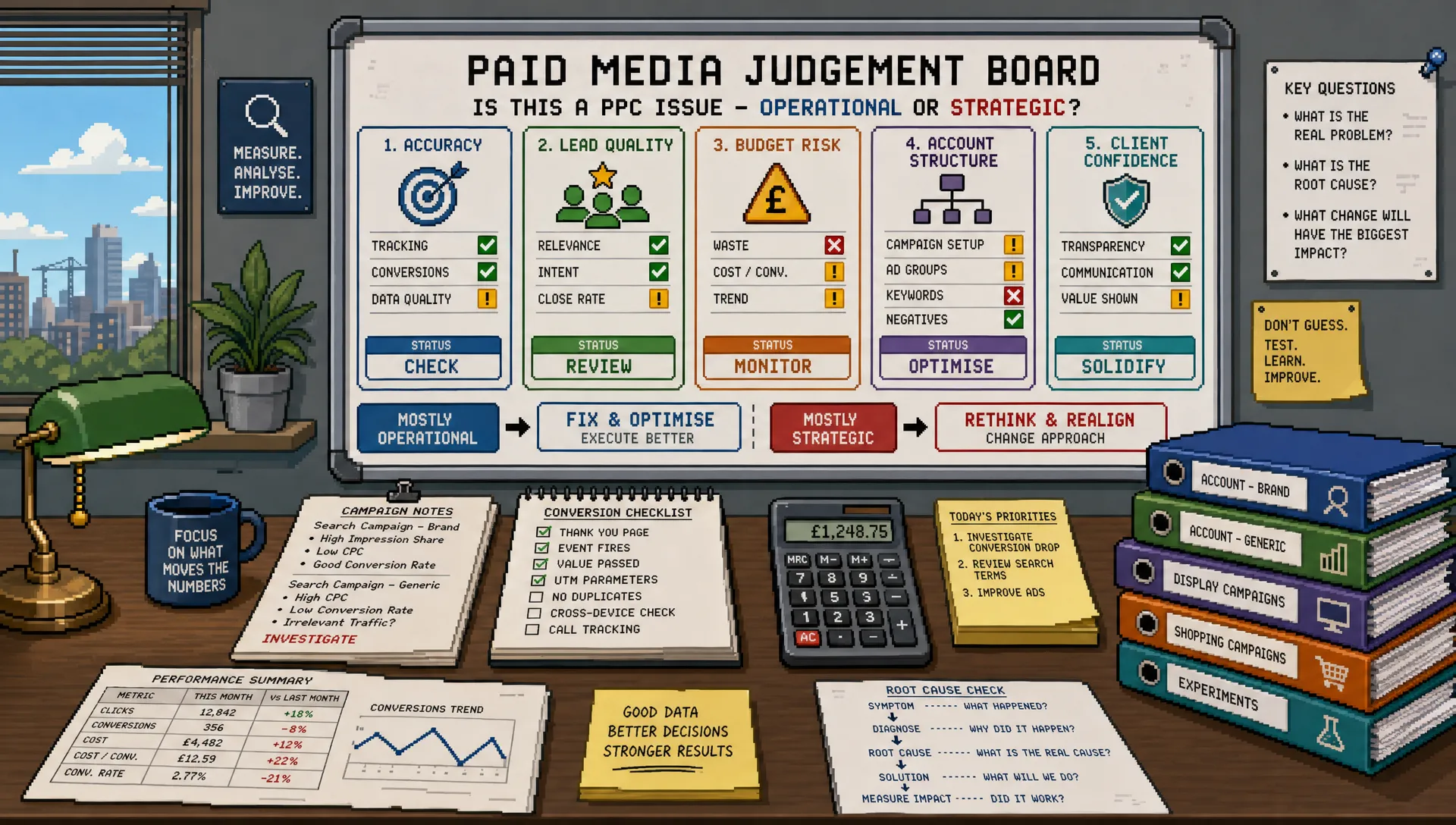
Junior PPC delivery can look cheaper on paper. A junior account executive costs less, can handle routine campaign changes, and may keep the wheels turning when an agency is busy. But when client spend, tracking accuracy and retention are on the line, the cheapest execution is rarely the lowest-risk option.
The difference is not simply years of experience. It is the quality of judgement applied to decisions that compound over time. Paid media accounts are full of small choices: which conversion action to optimise towards, when to consolidate campaigns, when to segment, when to hold back, when to challenge the brief, and when a reported performance issue is actually a tracking problem.
That is why senior PPC support so often outperforms junior delivery. It does not just complete tasks faster. It reduces avoidable waste, protects client confidence, and helps agencies make better commercial decisions under pressure.
The real difference is judgement, not button-clicking
Modern PPC platforms are easier to access than ever. Anyone can open Google Ads, Meta Ads or Microsoft Ads and launch a campaign. The platforms provide recommendations, automated bidding, campaign templates and simplified workflows.
That accessibility can create a dangerous impression: that PPC delivery is mainly operational. Build the campaign, apply the recommendations, check the search terms, adjust budgets, send the report.
In reality, the operational work is only the visible layer. The performance difference usually comes from the thinking behind it.
A junior team member may ask, “What change should I make next?” A senior PPC specialist asks, “What is the commercial problem we are solving, and what evidence do we have?”
That shift matters because PPC accounts rarely fail for one obvious reason. Lead quality might be poor because conversion tracking is too broad. Cost per acquisition might rise because the account is optimising towards low-intent form fills. Meta performance might dip because creative fatigue is being mistaken for audience fatigue. Search campaigns might look profitable because offline conversion quality is missing from the picture.
A senior PPC specialist is more likely to connect those dots before spend is wasted.
Where junior-only PPC delivery tends to break down
Junior delivery is not inherently bad. Many excellent PPC specialists start by managing routine tasks, learning platform mechanics and supporting senior strategists. The issue appears when junior delivery becomes the main line of defence for complex accounts.
That is when agencies often see the same patterns.
- Optimisation becomes reactive rather than strategic.
- Platform recommendations are accepted without enough scrutiny.
- Tracking problems are spotted late, often after the client has lost confidence.
- Campaign structure becomes messy because changes are layered on top of old decisions.
- Reports explain what happened, but not what should happen next.
- Senior agency staff get pulled into PPC conversations they are not equipped or paid to handle.
This creates a hidden cost. The agency may save on salary or freelancer fees, but it pays through slower diagnosis, more internal oversight, weaker client communication and missed opportunities.
In paid media, delay is expensive. A week spent testing the wrong hypothesis is a week of budget spent on the wrong problem.
Senior PPC support protects the inputs that performance depends on
Good PPC performance depends on the quality of the inputs. Bidding strategies, audience signals and campaign structures can only work properly when the account is built around the right data.
Google’s own guidance on Smart Bidding explains that automated bidding uses signals and conversion data to optimise auctions. That means poor conversion setup, misleading goals or incomplete tracking can send automation in the wrong direction.
This is one of the biggest areas where senior PPC support outperforms junior delivery. A senior specialist is less likely to treat tracking as a reporting afterthought. They understand that measurement choices shape optimisation choices.
For example, a junior might see a campaign generating many conversions and increase spend. A senior specialist may first ask whether those conversions are qualified, duplicated, imported correctly, or aligned with the client’s actual sales process.
The same applies to GA4 events, lead forms, call tracking, ecommerce revenue, offline conversions and Meta pixel data. If the account is optimising towards weak signals, more activity will not solve the problem. It will simply scale the wrong behaviour.
Faster diagnosis means less wasted spend
One of the most valuable traits of senior PPC support is pattern recognition. A senior specialist has usually seen enough account problems to know which issues need urgent attention and which are just noise.
That does not mean guessing. It means knowing where to look first.
If lead volume drops, the cause might be search demand, budget caps, impression share, policy restrictions, landing page changes, tracking failures, bid strategy learning, increased competition or a change in query mix. A junior account manager may work through those possibilities slowly. A senior specialist can prioritise the most likely causes based on the account context.
That speed matters to agencies because client pressure rarely arrives neatly. It arrives on a Monday morning, after a poor week of leads, when the account manager needs an answer before the next client call.
Senior PPC support gives the agency a clearer path: identify the issue, separate symptoms from causes, and communicate a credible action plan.
| Area of PPC delivery | Junior-only risk | Senior PPC support advantage |
|---|---|---|
| Campaign optimisation | Tweaks are made without a clear hypothesis | Changes are tied to commercial goals and evidence |
| Tracking and measurement | Data issues are spotted after performance has already suffered | Measurement is checked before decisions are made |
| Budget allocation | Spend is spread too evenly or moved too quickly | Budget is prioritised by risk, margin and opportunity |
| Platform recommendations | Suggestions may be applied without enough context | Automation is used selectively and challenged when needed |
| Client communication | Reports focus on metrics rather than meaning | Updates explain causes, actions and expected outcomes |
| Account structure | Legacy complexity builds over time | Structure is simplified where it improves control and learning |
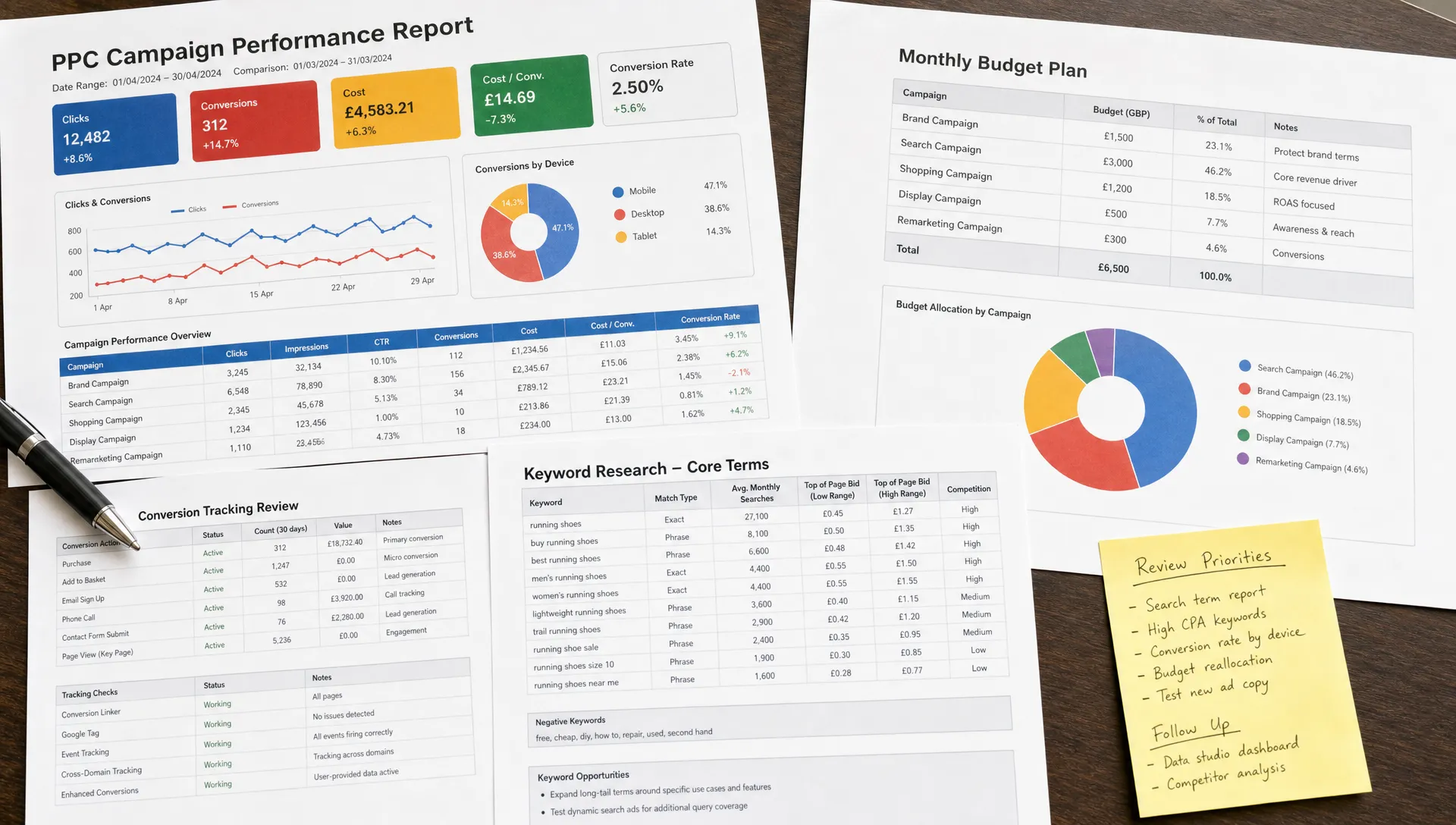
Senior PPC support strengthens client retention
Clients do not only judge PPC by performance metrics. They judge it by confidence. Do they feel the agency understands what is happening? Do they believe the next action is deliberate? Do they trust the numbers in the report?
Junior delivery can struggle here because client conversations often require more than platform knowledge. They require commercial translation.
A senior PPC specialist can explain why cost per lead rose, whether that increase is acceptable, what trade-offs exist, and what the agency is doing next. That is especially important when performance is mixed. Clients may tolerate short-term volatility if the reasoning is clear and the response is controlled.
This is where PPC becomes a retention issue, not just a delivery issue. If reports are vague, tracking is questioned, or the agency appears to be waiting for the platform to fix things, client trust erodes quickly.
For agencies under pressure, stronger delivery discipline can make a measurable difference. If you are dealing with urgent account problems, the principles in these PPC ads best practices for agencies under pressure are closely related to how senior specialists prioritise risk.
The agency model benefits from senior support
Agencies often use junior delivery because they are trying to protect margin. That is understandable. Recruitment is expensive, senior talent is hard to retain, and client demand can be unpredictable.
But junior-heavy delivery models can create operational drag. Account directors spend time checking PPC work. Founders get pulled into escalations. Project managers chase unclear updates. Clients ask technical questions that the delivery team cannot answer confidently.
Senior PPC support reduces that drag by adding expertise where it has the most leverage. The agency does not necessarily need a full-time senior hire for every account. It may need senior input at the moments where judgement matters most: audits, restructures, tracking reviews, strategy shifts, performance dips, new client onboarding and high-stakes reporting.
This is why many agencies choose flexible external support rather than hiring too early. On-demand expertise can help agencies scale delivery without committing to permanent headcount. For a deeper look at the operational side, see how paid media PPC support helps agencies scale faster.
When junior PPC delivery still has a place
Senior support outperforming junior delivery does not mean juniors have no role. A healthy agency delivery model can absolutely include junior team members.
Junior PPC staff can be valuable for routine builds, data pulls, search term checks, QA processes, reporting preparation and campaign maintenance. These tasks are important, and they help newer specialists develop.
The problem comes when juniors are left to make strategic decisions without senior oversight. PPC accounts need a clear hierarchy of responsibility. Juniors can execute, learn and support. Seniors should set direction, review risk, protect measurement quality and handle complex diagnosis.
The best model is not “senior does everything”. That would be inefficient. The best model is senior-led delivery, where the right level of expertise is applied to the right decision.
Signs your agency needs senior PPC support now
If an agency is unsure whether it needs senior PPC help, the warning signs are usually visible before a client is lost.
- PPC performance issues are taking too long to diagnose.
- Clients are asking questions your team cannot answer confidently.
- Reports show data, but do not lead to clear decisions.
- Tracking problems keep appearing after campaigns are live.
- Account managers are spending too much time translating PPC updates.
- Junior team members are making budget or strategy calls without enough support.
- New business is being delayed because delivery capacity is stretched.
Any one of these can be manageable. Several at once usually indicate that the agency has outgrown junior-only PPC delivery.
Senior PPC support is not just a rescue option when things go wrong. Used well, it prevents issues from becoming urgent in the first place.
What good senior PPC support should look like
Good senior support should make the agency feel calmer, not more dependent. It should create clarity, reduce bottlenecks and strengthen the agency’s own client relationships.
For agency teams, that usually means support that is practical and commercially aware. The senior specialist should be able to review accounts quickly, identify what matters, explain trade-offs clearly and execute without needing excessive hand-holding.
White-label delivery can be especially useful here. It allows the agency to access senior PPC expertise while keeping the client relationship under its own brand. That matters for agencies that want to protect trust, avoid recruitment pressure and flex capacity around demand. If that model is relevant to your agency, this guide to why white label PPC management helps agencies scale explores the scaling benefits in more detail.
The key is to avoid treating senior PPC support as a luxury. For many agencies, it is a risk control mechanism. It protects client spend, improves decision-making and gives junior team members a better environment to learn within.
Frequently Asked Questions
Why does senior PPC support usually perform better than junior delivery? Senior PPC support performs better because it brings stronger diagnosis, better commercial judgement and more reliable measurement oversight. Junior delivery can handle tasks, but senior specialists are better equipped to decide which tasks matter most.
Is junior PPC delivery always a bad idea? No. Junior PPC delivery can work well for routine execution, reporting support and structured campaign maintenance. It becomes risky when juniors are expected to own strategy, tracking decisions or complex client performance issues without senior oversight.
Can senior PPC support replace an in-house hire? In some cases, yes. For agencies with fluctuating demand, senior PPC support can provide flexible expertise without the commitment of recruitment. For larger or more stable workloads, it can also complement an in-house team.
What should agencies look for in senior PPC support? Agencies should look for clear communication, strong tracking knowledge, experience across relevant platforms, commercial awareness and the ability to work within the agency’s client relationship. White-label experience is also important if the specialist will support delivery anonymously.
When is the right time to bring in senior PPC help? The right time is before performance issues become client retention issues. If PPC is slowing delivery, creating uncertainty or taking too much senior agency time, external senior support can help stabilise the account and protect the relationship.
Need senior PPC support without another hire?
If your agency needs senior paid media expertise without recruitment, long contracts or visible outsourcing, PPC Ghost provides on-demand, white-label PPC support for UK agencies.
You can access senior-only support across Google Ads, Meta Ads, Microsoft Ads, GA4 and tracking, with flexible pay-as-you-go delivery and same-day turnaround where needed. Your agency keeps the client relationship, while the technical work gets handled by a specialist who understands agency pressure.
If junior delivery is creating risk, senior PPC support can help you protect performance, retain clients and scale with more confidence.