When to Use a Freelance Google Ads Specialist
Learn when to use a freelance Google Ads specialist, where they beat hiring, and how agencies can scope support without fixed cost.

Bringing in a freelance Google Ads specialist is not just a way to cover a diary gap. Used well, it can protect client retention, speed up delivery, reduce wasted media spend, and give your agency senior paid search expertise without committing to a permanent hire.
The key is knowing when freelance support is the right fit, and when it is only masking a deeper resourcing or positioning problem.
For agencies, the best time to use a freelance Google Ads specialist is usually when the work is commercially important, time-sensitive, and specific enough for an expert to make an impact quickly. That might mean rescuing a difficult account, launching a new client, fixing tracking, auditing underperforming campaigns, or adding capacity during a busy period.
Below is a practical guide to the moments when freelance Google Ads support makes sense, how it compares with hiring, and how to scope the engagement so it strengthens your agency rather than creating another management burden.
What a freelance Google Ads specialist actually does
A freelance Google Ads specialist is an independent paid search expert who supports campaign strategy, setup, optimisation, troubleshooting, reporting, or account audits on a flexible basis. For agencies, that support may be client-facing, behind the scenes, or fully white-label depending on the arrangement.
The strongest freelancers are not just button-pushers inside Google Ads. They understand commercial goals, conversion tracking, search intent, budget control, bidding strategy, landing page relevance, and how paid search fits into the wider client relationship.
Typical freelance Google Ads work includes:
- Auditing existing accounts to identify wasted spend, tracking problems, structural issues, and missed opportunities.
- Building or rebuilding campaigns for Search, Performance Max, Shopping, Demand Gen, YouTube, or remarketing where relevant.
- Improving conversion tracking using Google Tag Manager, GA4, offline imports, call tracking, or CRM data.
- Optimising search terms, match types, negative keywords, ad copy, assets, audiences, bidding, budgets, and landing page alignment.
- Supporting internal account managers with specialist recommendations, documentation, or white-label delivery.
If you are unsure whether your current delivery model is missing core PPC fundamentals, it is worth comparing your process with what professional Google Ads management should include.
When a freelance Google Ads specialist is the right move
Freelance support is most valuable when your agency has a clear commercial need but does not need, or cannot justify, a permanent hire. The goal is not just to “get someone on the account”. The goal is to apply senior judgement at the point where it matters.
Your agency has won work faster than it can deliver
New client wins are good news until delivery capacity becomes the bottleneck. If your team is already at full stretch, adding another Google Ads account can lead to rushed setup, weak tracking, thin search term management, or junior staff making decisions they are not ready to own.
A freelancer can help you absorb the spike without slowing down onboarding. This is especially useful when a client expects fast launch timelines, has a meaningful budget, or needs a credible plan before they sign a longer-term retainer.
This is not only about speed. A senior specialist can set the account structure properly from the start, which reduces rework later. Poor foundations can take months to unwind, especially if automated bidding has been learning from messy conversion data.
An account is spending more but not improving
One of the clearest triggers for specialist support is rising ad spend without better pipeline, revenue, or lead quality. The agency may still be “optimising”, but the account has stopped moving in the right direction.
This can happen when campaigns have become too broad, Performance Max is masking poor-quality traffic, conversion tracking is over-counting, or the team is relying too heavily on automated recommendations. A freelance specialist can provide an external diagnosis before the client loses confidence.
If this is already happening across multiple accounts, you may recognise some of the signs you need a Google Ads expert on demand, especially where performance issues are becoming client-service issues.
Your team needs senior input, not another junior pair of hands
Many agencies do not have a shortage of people. They have a shortage of senior judgement.
A junior marketer can make routine changes, pull reports, and follow checklists. But they may struggle to decide whether a lead-quality issue is caused by query intent, landing page friction, tracking setup, sales follow-up, audience expansion, or the offer itself.
That is where a specialist helps. They can review the account, isolate the likely cause, and give your team a clearer path forward. This is particularly valuable for agencies that offer PPC as part of a wider digital package but do not have deep paid search expertise in-house.
Tracking or GA4 issues are damaging decision-making
Google Ads optimisation is only as good as the data it learns from. If conversion actions are duplicated, imported incorrectly, missing consent considerations, or recording low-value events as primary goals, campaign decisions quickly become unreliable.
Google’s own guidance makes clear that conversion tracking helps measure valuable customer actions, but in practice many accounts still contain legacy goals, inflated form submissions, or events that do not map to commercial value.
A freelance Google Ads specialist with tracking experience can help your agency clean up the measurement layer before making larger optimisation decisions. This is especially important before scaling budgets, changing bidding strategy, or judging whether a campaign is profitable.
You need white-label PPC delivery
Some agencies want to keep the client relationship fully in-house while using outside expertise behind the scenes. In that situation, a white-label freelance specialist can be a strong fit.
The agency owns the relationship, positioning, and commercials. The specialist supports delivery anonymously, providing audits, builds, optimisations, notes, or recommendations under the agency’s brand.
This model works well when you want to expand PPC revenue without publicly outsourcing the work, hiring a full-time specialist, or asking your existing team to operate outside their comfort zone.
You want to test demand before hiring
Hiring a permanent Google Ads specialist makes sense when you have consistent workload, reliable margins, and enough accounts to keep that person focused. But hiring too early creates pressure. You need salary, management time, software access, training, cover, and enough recurring work to justify the role.
A freelancer lets you validate demand first. You can test whether PPC is becoming a serious service line, whether clients will pay for deeper management, and what level of specialist input your agency actually needs.
| Agency situation | Why freelance support can fit | Main risk to manage |
|---|---|---|
| Sudden new client win | Adds delivery capacity without recruitment delays | Scope must be clear before work starts |
| Underperforming account | Brings senior diagnosis and fresh perspective | Client expectations need careful handling |
| Tracking problems | Fixes the data layer before optimisation decisions | Access to GTM, GA4, CRM, or forms may be needed |
| White-label PPC offer | Lets the agency retain the client relationship | Communication process must be agreed upfront |
| Testing a PPC service line | Reduces fixed cost while demand is uncertain | Agency still needs ownership of positioning and pricing |
When not to use a freelance Google Ads specialist
Freelance support is flexible, but it is not the right answer to every problem. If your agency needs daily client management, always-on availability, internal leadership, team training, sales support, and long-term service development, a full-time hire or a specialist PPC partner may be better.
You should also be cautious if the client brief is vague. “Improve Google Ads” is not a scope. A freelancer can help diagnose the problem, but the agency still needs to define the commercial context, reporting expectations, budget constraints, approval process, and who owns client communication.
Freelance support is also a poor substitute for fixing an unprofitable service model. If your retainers are too low, clients expect unlimited work, or account managers sell complex PPC without allowing time for proper setup, bringing in a freelancer may expose the margin issue rather than solve it.
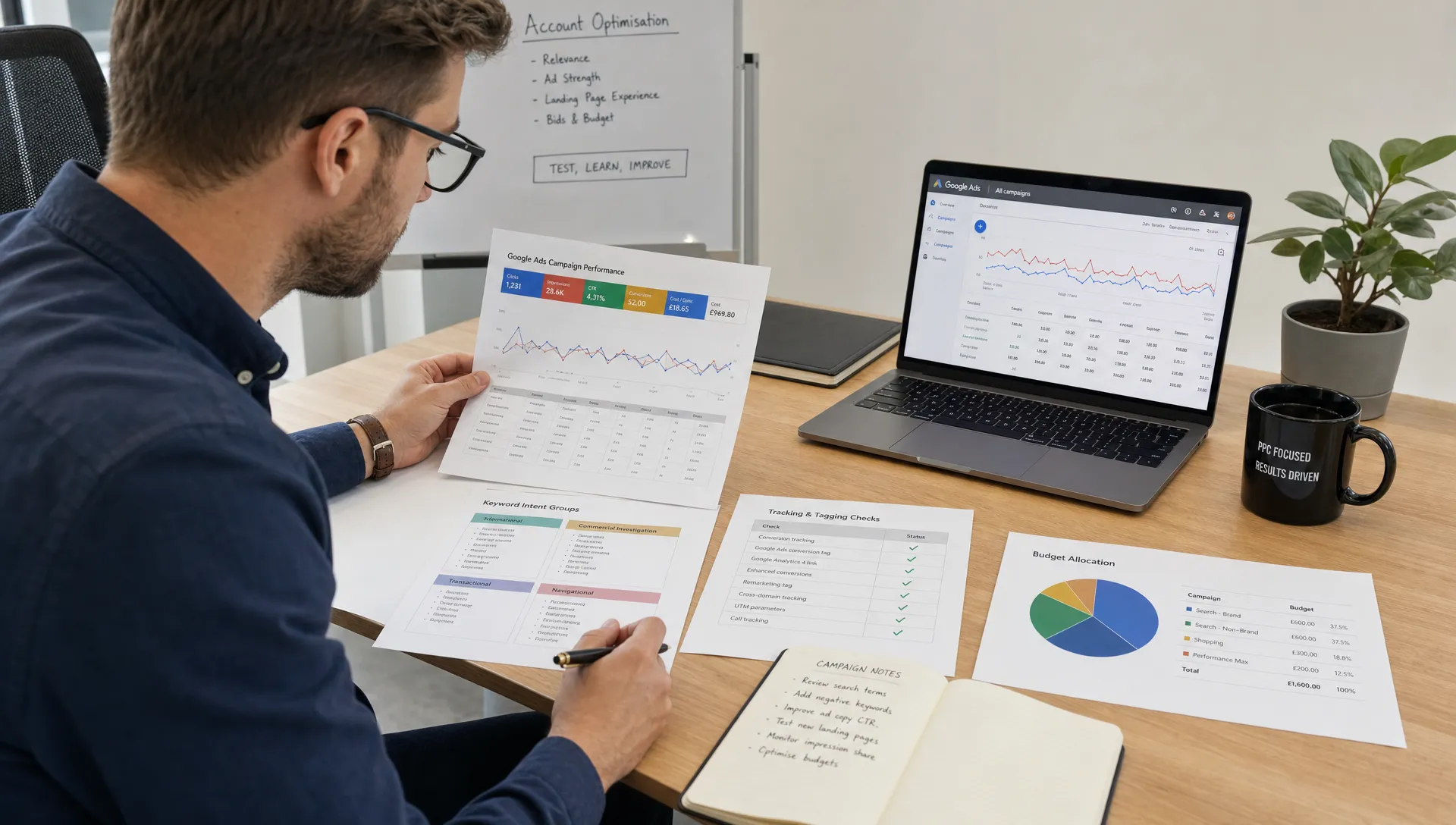
Freelance specialist vs in-house hire vs PPC agency
The right model depends on workload, urgency, complexity, and how much control you want to retain. For many agencies, the decision is not permanent. You might use a freelancer during a growth phase, hire later once demand is proven, and still keep specialist support for overflow or advanced troubleshooting.
| Option | Best for | Strength | Limitation |
|---|---|---|---|
| Freelance Google Ads specialist | Flexible expert delivery, audits, launches, rescue work, overflow | Senior skill without fixed headcount | Requires clear scope and good communication |
| In-house hire | Consistent workload across multiple accounts | Embedded in your agency processes | Recruitment, salary, training, and management commitment |
| PPC agency or white-label partner | Broader delivery capacity across channels or accounts | More structured support and continuity | May be less flexible for very small scopes |
| Junior internal team | Routine execution, reporting, simple maintenance | Lower cost and close integration | Limited strategic judgement on complex accounts |
If you are comparing external PPC partners more broadly, this guide on choosing the right PPC company for your agency can help you assess fit beyond price alone.
How to scope freelance Google Ads work properly
The difference between a smooth freelance engagement and a frustrating one is usually scope. The more precise the brief, the faster a specialist can add value.
Start by defining the outcome. Do you need an audit, a rebuild, a launch, tracking support, ongoing optimisation, or a second opinion before a client review? Each requires different access, timelines, and deliverables.
Next, define the commercial context. A campaign that looks inefficient in-platform may still be profitable if it drives high-value deals. Equally, a campaign with a strong cost per lead may be failing if sales teams reject most leads. The specialist needs to know what “good” means for the client.
A useful brief should cover:
- Client business model, target locations, core products or services, and priority margins.
- Current monthly media spend, target CPA, target ROAS, lead quality concerns, or pipeline goals.
- Access needed for Google Ads, GA4, Google Tag Manager, Merchant Center, call tracking, CRM, or landing pages.
- Known constraints, such as compliance rules, brand restrictions, limited budgets, internal approval delays, or landing page limitations.
- Expected deliverables, such as an audit document, change log, build plan, tracking notes, reporting commentary, or optimisation roadmap.
- Communication rules, including whether the specialist is client-facing, white-label, anonymous, or purely internal.
It also helps to agree what the freelancer should not do. For example, they may be responsible for campaign recommendations but not landing page development, sales CRM cleanup, creative design, or client strategy calls unless agreed.
This protects both sides. The agency gets a clearer deliverable, and the specialist can focus on the work they were brought in to solve.
What to look for in a freelance Google Ads specialist
A strong specialist should be able to explain their thinking clearly. You are not only buying time in an ad platform. You are buying judgement.
Look for someone who asks about the client’s commercial model before proposing changes. If they jump straight into bid strategies without understanding lead quality, sales cycle, conversion value, or margin, they may optimise for platform metrics rather than business outcomes.
You should also expect them to understand measurement. In 2026, effective Google Ads management often depends on the quality of conversion data, consent-aware tracking, offline conversion imports, value-based bidding, and the ability to separate useful automation from lazy automation.
Good signs include clear audit reasoning, specific recommendations, confidence with tracking basics, sensible use of automation, and transparency about what can and cannot be improved quickly.
Red flags include guaranteed results, vague “we will optimise everything” promises, no questions about conversion quality, reluctance to document changes, or a fixation on vanity metrics such as clicks and impressions.
How agencies can make the relationship work
Freelancers perform best when they are treated as specialist operators, not as emergency inbox support. If every request is urgent, priorities become unclear and quality suffers.
Set a rhythm early. Decide whether work is handled through weekly optimisation blocks, one-off audits, launch projects, or retained support. Agree how changes are approved, how urgent issues are flagged, and who communicates with the client.
For white-label work, be especially clear about boundaries. Decide whether the specialist joins calls, writes notes for your account manager, uses your templates, or remains fully behind the scenes. None of these models is wrong, but ambiguity creates risk.
Finally, give feedback. If a recommendation is commercially sensitive, if a client has a history with a previous agency, or if your sales team knows a certain lead type is poor, say so. The more context the specialist has, the better the work becomes.
Quick decision guide: should you use a freelancer now?
A freelance Google Ads specialist is probably the right fit if your agency has a defined paid search problem, a client deadline, a temporary capacity gap, or an account that needs senior intervention.
A full-time hire may be better if you have predictable PPC workload every week, enough margin to support the role, and the management capacity to develop that person.
A broader PPC partner may be better if you need multi-channel delivery, account cover, repeatable systems, and deeper capacity across Google, Meta, Microsoft Ads, tracking, and reporting.
The simplest test is this: if the problem is specific, urgent, and valuable, use a specialist. If the problem is permanent, structural, and recurring, build or buy a longer-term delivery model.
Frequently Asked Questions
Is a freelance Google Ads specialist worth it for small agencies? Yes, if the agency has clients with enough media spend or commercial importance to justify senior input. For very small accounts, a freelancer may still help with audits, setup, or tracking fixes, but ongoing management must make sense against the retainer.
Is a freelancer cheaper than hiring in-house? Not always on an hourly basis, but usually lower risk as a total commitment. You avoid recruitment time, salary, employment costs, training, and the need to guarantee enough workload every month.
Can a freelance Google Ads specialist work white-label? Yes, many specialists support agencies behind the scenes. The key is agreeing communication rules, documentation style, access, confidentiality, and whether the specialist will ever speak directly to the client.
How quickly can a specialist improve a Google Ads account? Some issues, such as wasted search terms, broken conversion actions, poor campaign structure, or obvious budget leakage, can be identified quickly. Performance improvements may take longer because bidding systems, conversion volume, competition, and landing pages all affect results.
What access should I provide? At minimum, the specialist usually needs Google Ads access. Depending on the scope, they may also need GA4, Google Tag Manager, Merchant Center, call tracking, CRM reports, landing page access, or historic performance data.
Should agencies use freelancers for Performance Max? Yes, if the specialist understands feeds, assets, audience signals, conversion quality, brand controls, and reporting limitations. Performance Max can work well, but it needs strong inputs and careful interpretation rather than blind reliance on automation.
Need senior Google Ads support without adding headcount?
If your agency needs flexible PPC delivery, a freelance specialist can be the difference between protecting a client relationship and stretching your team too far.
PPC Ghost provides on-demand, white-label PPC expertise for agencies, including Google Ads, Meta Ads, Microsoft Ads, GA4, and tracking support. It is built for agencies that need senior-only execution, flexible scaling, and no long-term contracts.
Use freelance support when the account matters, the timeline is tight, and the work needs experienced judgement from day one.